Google has confirmed that Googlebook detachables will arrive as the next hardware form factor for its new laptop platform. Speaking to developers at the Android Dev Summit in California, the company revealed that tablet designs with removable keyboards will soon join the clamshell and convertible machines launched in October.
Key points
- Google announced during a developer keynote that Googlebook devices will expand into detachable tablets.
- The current Googlebook lineup consists of five premium laptops built by Acer, Asus, Dell, HP, and Lenovo.
- Early software in Googlebook OS still limits system navigation to landscape orientation, presenting an interface hurdle for pure tablet use.
- Leaked hardware filings indicate Lenovo is preparing the first detachable tablet running the operating system.
Expanding beyond traditional laptops
Google launched its Googlebook hardware line on 4 October 2026, marking a significant strategic pivot toward an Android-powered desktop computing environment. The initial hardware launch introduced five laptops manufactured in partnership with Acer, Asus, Dell, HP, and Lenovo, starting at $899.
During Wednesday’s developer keynote at the Android Dev Summit, Google executives outlined where the hardware ecosystem goes next. The company highlighted that the platform “spans across large screen form factors from clamshells, convertibles, and soon detachables.” The comment provides the first official confirmation that Google intends to take its hybrid operating system directly into the tablet category.
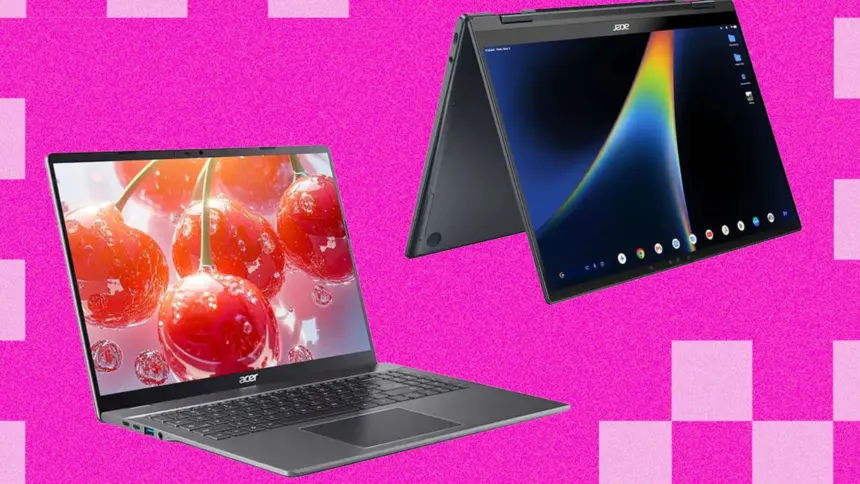
Four of the five debut Googlebooks use conventional clamshell designs. Only the Acer Googlebook 14 features a flexible 2-in-1 hinge that rotates into tent and tablet configurations. Bringing true detachables to market will require hardware that functions standalone without a permanent keyboard deck attached.

How Googlebook OS handles tablet mode
Googlebook OS represents a fresh software architecture for Google. Built directly on top of Android while preserving the Linux kernel, the platform runs the full desktop version of the Google Chrome browser alongside native Google Play Android applications. This architecture was designed as an evolution from Chrome OS, giving laptops access to mobile apps without sacrificing web productivity.
Day-one testing of the platform reveals that Google still has interface work to complete before pure tablets hit shelves. While full-screen Android apps can rotate and operate in portrait orientation, the core system interface does not. The Googlebook OS desktop homescreen, the Overview multitasking screen, and the primary application tray are locked into landscape mode.
For convertible devices like Acer’s model, the landscape restriction is manageable because the keyboard remains attached as a stand. For a dedicated tablet that users hold vertically in two hands, an orientation lock creates immediate friction. Developers at the summit were encouraged to adapt their large-screen layouts, as software patches will need to introduce portrait desktop support before standalone tablet hardware can ship.
What the leaks reveal about Lenovo’s hardware
Hardware industry leaks earlier this year pointed toward Lenovo as the primary manufacturing partner for the first Googlebook tablet. Documentation surfaced in July describing a Lenovo-built device equipped with a magnetic keyboard cover, an integrated kickstand, and a dedicated camera status light dubbed the Glowbar.

That tablet appeared alongside specifications for a compact clamshell laptop designed to sit below Lenovo’s existing 15-inch model. While Google did not mention partner names on stage at the summit, the appearance of the detachable category in official roadmaps aligns with those hardware leaks. Pricing and processor details for the tablet remain undisclosed.
The existing lineup relies on high-end silicon. Acer and Dell deployed Qualcomm Snapdragon X Elite processors in their machines, while Asus and HP configured their variants with Intel Core Ultra processors. All launch models standardise on 16 GB of memory and 512 GB of solid-state storage. Whether upcoming tablets will maintain those strict specifications or introduce lower entry prices remains unconfirmed.
The future of premium Android tablets
The introduction of tablet-style Googlebook hardware raises questions about Google’s broader personal computing strategy. Android tablets have historically struggled to deliver a compelling desktop multitasking setup, prompting third-party manufacturers to build proprietary tools.
Samsung developed Samsung DeX in 2017 to provide an external desktop interface on Galaxy smartphones and tablets. DeX offers windowed multitasking, external monitor scaling, and deep integration with native utilities. Tech publications evaluating Googlebook OS noted that Galaxy tablet owners already receive comparable desktop tools inside existing software at no extra cost.
However, standard Android tablets lack the desktop Chrome engine found in Googlebooks. Because Googlebook OS packages a complete desktop browser engine with separate browser update channels, detachable tablets running the software could browse complex web tools with desktop parity. That distinction gives a Googlebook tablet an advantage over traditional Android slates for office work, even if early software bugs and unoptimised mobile apps still hamper the user experience.
Balancing Chromebooks and Googlebooks
Google has maintained that traditional Chromebooks will remain available alongside the Googlebook tier, particularly for price-conscious education and budget buyers. When Google launched this initiative in late 2023 under the Chromebook Plus banner, it set baseline processor and memory standards for mainstream laptops.
Standard Chromebooks often sell between $150 and $500, relying on lightweight Chrome OS builds to preserve responsiveness on lower-tier hardware. Googlebooks target higher price tiers above $800, competing directly against Windows Copilot+ PCs and Apple’s MacBook Air. The company has promised that select modern Chromebooks will eventually receive an update path to Googlebook OS, though it has not yet published an eligible device list or deployment calendar.
Hardware longevity remains an important metric for commercial and educational buyers. Google established automatic update timelines to guarantee platform stability over multiple years, and announced a new policy granting ten years of support to modern machines. Bringing detachable tablets into the Googlebook family suggests the company wants long-term device support across every major portable form factor.
What happens next
Google has not attached a public release date to its upcoming detachable hardware. System updates addressing portrait orientation and desktop app scaling are expected to roll out across developer channels before manufacturers formally announce production units.
Hardware partners are expected to unveil their next wave of devices in early 2027, with Lenovo positioned to lead the transition into tablet form factors.