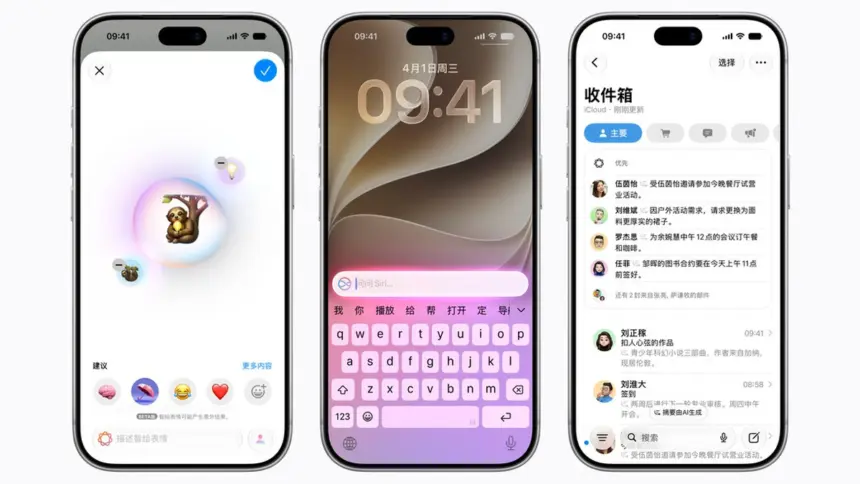
Apple Intelligence China testing will begin on 4 November 2026 with the release of the first iOS 27.3 developer beta, Apple confirmed on Friday. The software update brings the company’s generative AI tools to mainland Chinese iPhone users for the first time, ahead of a planned public launch across the country in December.
Key points
- Apple will issue the first iOS 27.3 developer beta on 4 November, with a wider public release scheduled for December 2026.
- The rollout integrates Alibaba‘s Qwen model to handle third-party generative queries within Siri, Writing Tools and Visual Intelligence.
- Hardware support is limited to the iPhone 15 Pro, iPhone 16 series, iPhone Air and iPhone Duo, with Mac and iPad excluded for now.
- Advanced Siri AI features announced earlier this year remain unavailable in mainland China under this initial software release.
How Apple Intelligence works in China
The upcoming software release introduces local users to a suite of generative features first rolled out internationally. In a statement posted to its regional website, Apple announced that the first wave of tools will run on supported iPhone models running the iOS 27.3 developer build next week. Because of time zone differences, the release date of Wednesday 4 November in Beijing corresponds to Tuesday 3 November in the United States.
Instead of relying on OpenAI’s ChatGPT as it does in several western markets, Apple has teamed up with Chinese technology group Alibaba. The collaboration embeds Alibaba’s Qwen artificial intelligence assistant directly into system applications. When users encounter complex requests, Siri can route tasks to Qwen to tap into external knowledge bases.
Users can query Qwen about images, text and long-form documents including PDFs and slideshow presentations. Access to Qwen works through standard account logins or through Sign in with Apple. Within system-wide Writing Tools, a dedicated compose function lets users generate original copy from scratch using Alibaba’s model.

Apple stated that on-device functions rely on its own trained generative models, while Qwen serves as the external assistant for broader general-knowledge queries. Reuters reported in August that Apple trained a proprietary large language model specifically to satisfy regulatory requirements in mainland China.
The first wave of iPhone features
The initial release includes text editing, image editing and system triage tools on supported handsets. System-wide Writing Tools allow users to rewrite, proofread and summarise text across first-party and third-party apps. In the Photos app, a Clean Up tool removes unwanted objects from pictures without altering the surrounding composition.
Users can create custom Genmoji graphics from short text descriptions or assemble Memory movies from written prompts. Natural language search in Photos allows users to locate specific images or video clips by describing scenes, objects or people in plain words.
Apple is also rolling out its notification triage system. The Lock Screen will display Notification Summaries for active conversation threads and notification stacks, while Priority Notifications float time-sensitive alerts to the top. A dedicated Reduce Interruptions Focus mode screens alerts automatically, delivering only urgent pings.

In the Mail app, a Priority Messages tray sits above the primary inbox to highlight items like flight tickets or same-day appointments. Long email chains can be condensed into short bullet points with Mail Summaries, and Smart Reply suggests pre-written responses in Mail and Messages. In Notes and Phone, users can record conversations and automatically generate text summaries from audio recordings.
Camera-based image search also arrives through Visual Intelligence. By pointing the camera at physical storefronts, landmarks or objects, users can pull up details and translations instantly. Live Translation works across Messages, FaceTime and Phone calls, and users can conduct real-time bilingual conversations using AirPods.
Device support and system requirements
The rollout of some Apple Intelligence features in China comes with specific hardware and language constraints. The software requires an iPhone 15 Pro, iPhone 15 Pro Max, any handset in the iPhone 16 range, the iPhone Air or the foldable iPhone Duo.
To activate the software, owners must set both their device interface and Siri language settings to English or Simplified Chinese. Earlier standard iPhone models cannot run the system because they lack the required processing memory.
Live Translation through audio devices requires compatible hardware running the latest firmware. Supported models include AirPods 5, AirPods 4 with Active Noise Cancellation, AirPods Pro 2 or later, and AirPods Max 2, paired with a compatible iPhone.
Apple stated that the platform will remain exclusive to the iPhone during this stage. The company confirmed that Mac and iPad users in China will not receive the toolset until local regulators clear the software for those platforms.
Excluded tools and regulatory background
While iOS 27.3 brings core productivity tools to China, it omits several newer capabilities. The updated Siri AI persona, which Apple revealed at WWDC 2026, is absent from this release. Image Playground, Apple’s standalone image generation application, will also remain unavailable to users in China.
The standard Siri interface in iOS 27.3 receives only incremental updates, such as Type to Siri and improved conversational handling when a speaker stumbles over words. It does not include on-screen awareness or cross-app action execution.
The selective rollout follows a prolonged approval procedure with Chinese authorities. Beijing requires artificial intelligence models distributed to domestic consumers to undergo strict safety evaluations and algorithmic registration. Reuters reported in July that Apple had overcome a key regulatory barrier following negotiations with regulators, and Chinese outlet The Paper reported that chief executive Tim Cook later confirmed approvals were progressing.
Earlier this week, Apple released iOS 27.2 to the public, adding Siri AI support for French, Japanese, Korean, Portuguese and Spanish, alongside a promise to support Traditional Chinese before the end of the year. That release did not address the mainland market. Following the developer beta next week, general consumers across China will receive the initial feature set when iOS 27.3 ships in December.