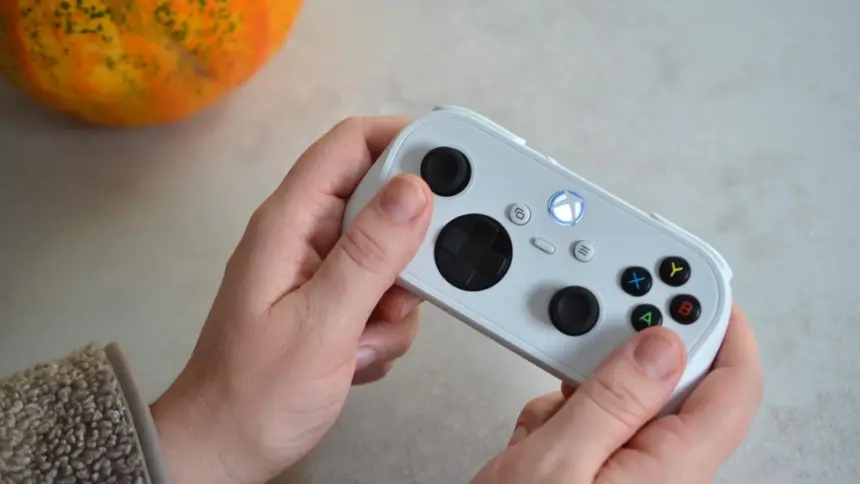
Microsoft will release the compact Xbox Nano controller on 4 November 2026 for $49.99, introducing a direct Wi-Fi connection designed to cut latency on Xbox Cloud Gaming. The miniature peripheral weighs 101 grams and includes an experimental feature that bypasses intermediate devices to link directly with cloud servers.
Key points
- The miniature controller costs $49.99 and goes on sale on 4 November 2026.
- A Cloud Connect tool links the pad straight to cloud gaming servers across home Wi-Fi.
- The chassis weighs 101 grams, using smaller thumbsticks, buttons and triggers for compact use.
- Microsoft omitted vibration motors to limit internal bulk and preserve battery reserves.
Cloud connect over Wi-Fi
The headline technical addition inside the Xbox Nano controller is an experimental feature called Cloud Connect. When enabled, the controller routes button inputs directly across a local Wi-Fi network straight to Microsoft cloud gaming servers. The method avoids routing commands through the Bluetooth antenna of a phone, tablet or television.
Microsoft initially announced the peripheral in October as a compact alternative for younger players and travelling setups. Setup software on the device describes the connection method as a preview experience that remains under active development, warning users that features may shift before final release.
Direct network communication mirrors the approach Google used with its discontinued Stadia hardware and Amazon uses with its Luna controller. By sending input packets directly to server farms rather than synchronising locally with a host display device, players encounter lower latency when streaming demanding titles.
Hardware design and ergonomic changes
Measuring just over five inches in length, the chassis reduces nearly every surface compared to the standard Xbox Wireless Controller. The ABXY action buttons and both thumbsticks are scaled-down versions of standard components. The textured directional pad and the illuminated Xbox guide button retain their full size.
Analogue triggers on the shoulders are noticeably smaller and bottom out with a tactile click rather than the soft mechanical stop of full-sized hardware. The bumper switches above them carry a softer action. Despite the reduced footprint, Microsoft kept sculpted rear grips on the housing, allowing players to cradle the pad firmly during long matches.
The physical changes bring the total weight to 101 grams, making it roughly half the mass of a standard pad. To reach that target, Microsoft removed the vibration motors entirely. Leaving out the traditional rumble hardware helps to shave weight, reduce power draw, and fit into tight bag compartments.
Battery performance and charging speeds
A smaller shell restricts battery capacity compared to full-sized console gamepads, which run for up to 30 hours on swappable cells. Early testing indicates the internal battery drops by around 10 per cent during 30 to 40 minutes of continuous play, pointing to total single-session battery life of roughly five to six hours.

Quick charging offsets the smaller battery envelope. The controller takes in power through a standard USB-C port located on the top edge, gaining 30 per cent battery in under ten minutes from a compatible power source. Users can continue playing with the cable plugged in while the cell replenishes.
Hardware manufacturers have faced trade-offs when integrating wireless radios into small peripherals, a challenge shared by chipmakers bringing Wi-Fi to battery devices across smart hardware. Lower capacities make efficient data transmission critical when handling uninterrupted game traffic.
What the release means for Xbox hardware
At a $49.99 price on the Microsoft store listing, the accessory undercuts most standard first-party pads while serving as a testbed for the wider Xbox hardware ecosystem. Reports indicate that Microsoft plans to bring similar direct-to-cloud Wi-Fi features to future revisions of its flagship Elite controllers.
Cloud gaming has grown into a core priority for Xbox as the company expands access through smart television apps and browser streaming. Latency remains the biggest technical hurdle for interactive streaming, making input handling at the controller level an essential point of improvement.
Retail availability for the peripheral begins worldwide on 4 November 2026 across Microsoft channels and electronics retailers.