Google opened Android Studio and its mobile development toolchain to third-party AI coding agents on Wednesday at the annual Android Dev Summit, giving external models from Anthropic and OpenAI direct access to emulators, terminal commands, and system-level debugging tools.
Key points
- Android Studio Rabbit 2 introduces a Bring Your Own Agent feature that lets developers run rival assistants such as Claude and Codex inside the editor.
- New command-line tools allow coding models to render user interface previews and stream real test hardware from Google laboratories.
- Google released an on-device Agentic API powered by Gemini Nano 4 alongside system-level hooks built on the Model Context Protocol.
- Hardware maker XREAL partnered with Google to launch the XREAL AURA, a 1,099 dollar pair of Android XR smart glasses running Gemini.
Opening Android Studio to external models
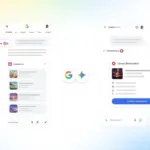
Google has shifted its developer strategy by opening its primary software environment to rival systems rather than restricting users to Gemini. The stable release of Android Studio Rabbit 2 includes a feature called Bring Your Own Agent. Built on the open Agent Client Protocol, the interface connects more than 40 external coding tools directly into the development environment.
Instead of forcing software engineers to toggle between separate chat interfaces and their codebases, Android Studio now allows them to install Anthropic’s Claude Agent, OpenAI’s Codex, and Google Antigravity from an integrated marketplace. Multiple assistants can run at the same time on a single project. The connected models inherit full IDE context, reading project hierarchies, symbol definitions, the Logcat logging pipeline, and emulator states without relying on manual terminal prompts or code scraping.
Adarsh Fernando, senior product manager for Android developer tools, said the goal was giving developers and their agents “the tools and knowledge to build high-quality Android apps faster.” Matthew McCullough, vice president of product for Android, added that the platform team chose to prioritise developer choice across competing model providers.

To manage the code these models produce, Google added a code verification utility named Change Review. The tool examines incoming diffs, explains the planned edits step by step, and alerts engineers to syntax problems before changes reach version control. For teams modernising older codebases, the Canary preview of Android Studio adds an automated migration tool to convert legacy XML layouts into modern Jetpack Compose components. Google also revealed it is testing Lightbuild, a declarative build system based on YAML that both human programmers and AI models can parse and edit.
Faster workflows in the terminal
Outside the graphical interface, Google extended the Android CLI to support autonomous coding workflows in continuous integration pipelines and command terminals. The update ships as an official agent plugin for Claude Code, Codex, and Antigravity.
A major bottleneck for automated code generation has been visual verification. Coding assistants previously struggled to inspect screen layouts without compiling entire projects and launching graphical emulators. A new command solves this by rendering Compose previews directly inside the terminal. According to Google, external models finished interface tasks 77 percent faster and consumed up to three times fewer tokens when using terminal previews.
For issues that cannot be reproduced in local software simulations, the update introduces remote hardware testing. By streaming physical test devices hosted in Google test centres, coding assistants can deploy test packages, simulate gestures, and capture logs across specific hardware configurations to diagnose device-specific defects.

Debugging and automated performance repairs
Google also integrated the open-source LeakCanary memory detection library into both the terminal CLI and the graphical Android Studio Profiler. Rather than processing memory snapshots on the mobile test device, which frequently causes sluggish execution and false readings, the system transfers heap dumps to the host machine for evaluation.
During internal A/B testing with Anthropic’s Claude Opus 5.5 model, Google reported that assistants identified and resolved complex memory leaks roughly twice as fast while cutting token expenditure by approximately 25 percent. The assistant ran end-to-end user journeys across several virtual devices in parallel, isolated the root causes in the heap allocations, updated the application code, and re-executed test suites to verify the fix.
Other additions give agents access to production telemetry. An interface command connects directly to Firebase Crashlytics and Android Vitals, streaming live crash dumps and application-not-responding incidents into terminal sessions. Agents can also run the Android Performance Analyzer for system traces and check code optimization through the R8 compiler shrinker.
Because base models frequently lack training on newly released Android libraries, Google published a catalogue of more than 30 Android Skills. These structured reference files supply instructions on niche tasks, such as verifying Google Play store policies prior to submission, resolving permission vulnerabilities, and adapting layouts for foldable devices and Googlebook laptops.
To evaluate these systems systematically, Google introduced Android Bench 2.0. The updated benchmark grades models across multi-day development scenarios, testing whether generated code successfully builds and operates while recording total cost and completion speed.
On-device Gemini APIs and connected apps
Alongside coding tools, Google introduced runtime application programming interfaces that let mobile software invoke models on consumer handsets. An alpha Agentic API powered by Gemini Nano 4 is now available in ML Kit, running tasks locally without sending data to cloud servers. The library manages function calling, stores local chat threads, coordinates execution loops, and applies on-device safety filters.
Google adopted the Model Context Protocol across its application framework, launching the AppFunctions API in beta. The layer lets installed software expose internal functions to system-level assistants. Building on that framework, an alpha Agent-to-UI library for Jetpack Compose allows assistants to respond with live, interactive components drawn from the host application rather than flat text blocks.
To expose these capabilities across web services, Google previewed the Connected Apps Platform. The hub lets businesses connect Android MCP servers to Google Search and the consumer Gemini app. More than 50 companies, including Adobe, Peloton, and Experian, have deployed integrations in the Gemini client, with public rollout across standard search pages scheduled in November.
The expansion reflects broad industry investment in automated software assistants, seen in recent market moves like Serval’s funding round and ongoing efforts by enterprise agent startups to embed autonomous systems into daily corporate workflows.
Hardware: XREAL AURA smart glasses
The Android Dev Summit also brought hardware news. Google and augmented reality manufacturer XREAL introduced the XREAL AURA, which XR lead Shahram Izadi described as the first tethered glasses operating on Android XR.
The glasses weigh under 95 grams and provide a 70-degree field of view through electrochromic dimming lenses. An external pocket puck powers the glasses, containing the battery, a touch trackpad, and Qualcomm’s Snapdragon Reality Elite processor. Users can float up to five virtual Android windows in space or connect a laptop via USB-C to project secondary displays.
Gemini runs natively across the AURA hardware, using outward sensors to monitor physical environments while tracking virtual screens. The model can arrange open workspace windows, highlight real-world objects, and offer context during daily tasks. Pre-orders for the headset opened Wednesday in the United States, Canada, and South Korea at 1,099 dollars, with deliveries beginning in mid-November.