Nvidia’s board has approached Arm chief executive Rene Haas as the chipmaker widens its Nvidia CEO search, following Jensen Huang’s sudden departure on Thursday. The executive recruitment effort comes as high-profile customers, including Elon Musk, and hundreds of employees mount a concerted push to reinstate the co-founder after his 33-year tenure leading the silicon giant.
Arm chief emerges in succession talks
The semiconductor maker began exploring external leadership after Huang stepped down over personal conduct inquiries. Haas, who has led SoftBank-backed British chip designer Arm since 2022, is among the prospective candidates reviewed by directors, according to the Economic Times, citing reporting by the Financial Times.
Haas previously worked at Nvidia for seven years more than a decade ago. He maintains established working relationships with Huang and multiple members of Nvidia’s board. That institutional background makes him a familiar figure as directors manage the first leadership handover since Nvidia’s founding in 1993.
Nvidia Chief Financial Officer Colette Kress is currently serving as interim chief executive while succession discussions proceed. However, the board indicated that candidate reviews remain preliminary. Directors stated that the company is hiring a recruitment agency rather than negotiating contracts directly.
In an official statement addressing the succession reports, the board said: “Any speculation regarding individual candidates, whether internal or external, is premature.”
Push from Musk and employees for reinstatement
While directors evaluate external candidates, external partners and employees have launched efforts to bring Huang back. Elon Musk, the chief executive of Tesla and SpaceX, announced his endorsement on Friday. Replying to a post on X, Musk said: “A petition is underway to reinstate Jensen and I’m signing it too.”
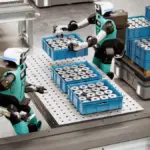
Musk relies heavily on Nvidia hardware, having established the chipmaker as the exclusive provider of graphics processing units for his expansive artificial intelligence facilities. As reported by Wccftech, Musk had previously advocated for Huang to return as chairman and described the prospect of working alongside him as an honour.
Inside Nvidia, staff dissatisfaction with Huang’s exit has surfaced quickly. An internal discussion thread created by a senior engineer before the resignation drew more than 1,600 comments, with the majority advocating for Huang to stay, according to Interesting Engineering. One worker sent a company-wide email urging staff solidarity, while another posted anonymously that the former chief executive deserved a second chance.
Public campaigns have gathered momentum alongside the internal discussions. An online petition titled Bring Jensen Huang back as Nvidia CEO, organised by shareholder Mohamed Adany, had recorded 170 verified signatures by Friday. Another unverified letter circulating online mirrored the language used during the 2023 executive crisis at OpenAI, claiming employees might defect to work on SpaceX chip hardware if Huang is not reinstated.
What prompted Jensen Huang’s resignation?
Huang stepped down on Thursday following mounting internal and public scrutiny over his personal conduct. As covered when Jensen Huang resigned as Nvidia chief executive, the executive departure concluded a 33-year leadership run that established Nvidia as the world’s pre-eminent producer of artificial intelligence computing silicon.
The controversy had also intensified following reports of an alleged relationship with Kimberly Powell, Nvidia’s vice president of healthcare. Governance scrutiny grew after a subsequent Nvidia board probe into the CEO affair revealed additional complications, including Reuters reporting an intimate relationship with a second company employee.
The inquiry deepened over Huang’s personal ties to Singaporean data centre executive Alice Huang. US national security officials scrutinised her logistics firm, Megaspeed, over allegations of smuggling export-restricted AI processors into China. Business filings also showed that she had established a Chinese venture with access to banned Nvidia computing clusters located in Shanghai.
Political reactions and governance risks
The executive shakeup has drawn direct responses from high-profile political figures in the United States. President Donald Trump disclosed during a televised interview with Stephen A. Smith that he spoke with Huang on Wednesday, shortly before the resignation was announced. Trump described Huang as an exceptionally talented leader and noted that Huang expressed profound regret regarding the emotional impact on his wife and family.
Trump remarked that stepping down made sense if federal investigators proved that Alice Huang operated as an intelligence asset, but noted the situation warranted a different interpretation if she held no foreign intelligence ties. Former Secretary of State Hillary Clinton commented on a podcast that standard counterintelligence protocol requires officials to warn an executive if a suspected honeypot operation is detected. However, CNN reported that US intelligence agencies have remained divided and inconclusive over whether Alice Huang had active links to Chinese state services.
Nvidia now balances the search for its next chief executive against operational and governance fallout. The board must formally select an executive search firm in the coming days while assessing whether employee and customer pressure could alter Huang’s final status at the firm.