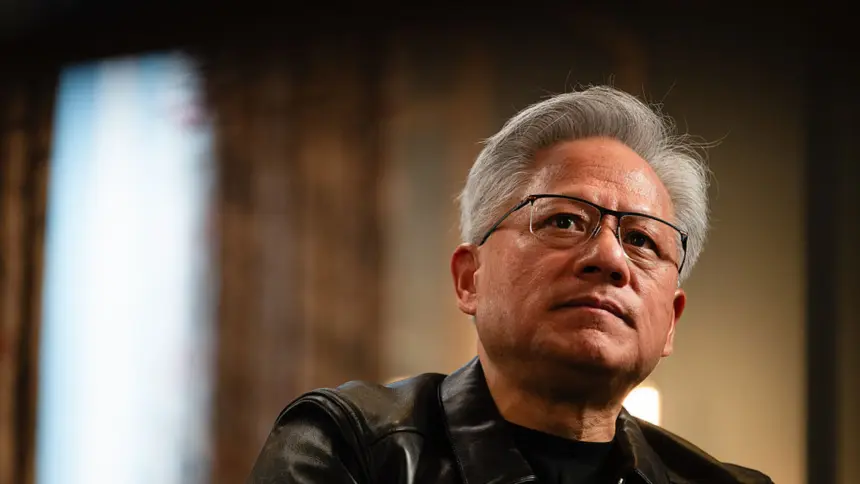
Nvidia’s board of directors has opened an independent inquiry into chief executive Jensen Huang after he admitted having an extramarital affair with a suspected Chinese intelligence operative. The Jensen Huang investigation, overseen by independent directors and outside legal counsel, follows intelligence reports that a businesswoman targeting Nvidia’s leadership passed commercial information to Beijing.
In a formal statement published on Sunday, Nvidia said the board “has no reason to believe that either national security or NVIDIA secrets were compromised” but confirmed its inquiry will examine all available material. A company spokesperson told CNET that Huang remains committed to leading the US chipmaker without interruption.
Huang, 63, admitted the relationship in an apology sent to the company over the weekend. In the internal memo, reported by The Verge, he said: “I was unfaithful to my wife. My actions hurt her and our children. There is no excuse for what I did.” Huang added that he took full responsibility and would cooperate fully with the board’s review.
What are the espionage allegations against Alice Huang?
The woman at the centre of the inquiry has been identified in news reports as Alice Huang, also known as Huang Le, who is not related to Jensen Huang. She served as managing director until at least 2023 at Megaspeed, a Singapore-based data centre operator that buys Nvidia graphics processors to supply computing power to Chinese artificial intelligence laboratories.
According to reporting from the New York Times cited by the BBC, American intelligence agencies placed Alice Huang under electronic surveillance over suspicions that she was helping Chinese firms evade export controls. Federal monitors intercepted communications between her and an American citizen, whom officials subsequently unmasked as Jensen Huang.
A memo circulated by US Secretary of State Marco Rubio earlier this year identified Alice Huang as an operative for China’s Ministry of State Security, The Guardian reported. Intelligence reports suggested Chinese handlers instructed her to obtain technical details about Nvidia’s most powerful processors and to encourage Huang to lobby the US government to ease restrictions on graphics chip exports to China.

Megaspeed previously told reporters that its current leadership hired external legal advisers to conduct an internal inquiry into the allegations. Beijing has rejected claims of an espionage operation directed at Nvidia, calling them groundless speculation, while Alice Huang did not respond to requests for comment.
Trade controls and Washington ties
The scandal strikes at the heart of the technological contest between Washington and Beijing. The US government banned exports of advanced AI semiconductors to China in 2022 to protect domestic supply chains and address national security risks. President Donald Trump loosened parts of those rules in 2025, and in January permitted Nvidia to ship limited batches of its second-tier H200 chips to Chinese buyers under specific conditions.
Huang had built close ties with the White House as an adviser on semiconductor infrastructure. He travelled with Trump’s official delegation to China in May, and in September attended a White House state dinner for Chinese President Xi Jinping. When questioned by reporters on Sunday, Trump defended the chief executive, calling him an honourable person who had performed an amazing job for the country.
Lawmakers on Capitol Hill have taken a sterner view. Three House Republican committee chairs wrote to Huang demanding that he attend a closed-door briefing on 18 November. House committee chairs Mast, Moolenaar and Crawford said the session will examine Nvidia’s corporate defences against foreign intelligence gathering and address Chinese infiltration into American technology.
What does the inquiry mean for Nvidia’s stock?
Nvidia has become the world’s most valuable semiconductor company, valued between $4.5 trillion and $5 trillion, because its chips power foundation models at OpenAI, Meta and other major AI developers. However, the tech sector has endured a turbulent month on Wall Street, with a broader sell-off stripping nearly $1 trillion from the Nasdaq in a single week. Nvidia’s stock fell 3.1% during the slump, weighing heavily on the S&P 500 index.
Market analysts warn that any threat to Huang’s leadership introduces fresh volatility. Dan Ives, an analyst at Yorkville Ives, told Gizmodo that the board’s findings could determine whether Huang remains in his post, noting that his position is central to Nvidia’s global strategy. Other AI companies have previously warned employees to be wary of possible spies targeting staff with romantic advances, TechCrunch noted.
What happens next
The independent committee of Nvidia’s board has not set a formal deadline for concluding its investigation. Huang is scheduled to brief congressional committee leaders behind closed doors in Washington on 18 November, one day after Nvidia releases its third-quarter financial results on 17 November. The company is also scheduled to host a technology conference in Washington at the end of the month.