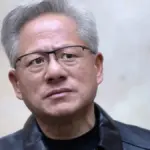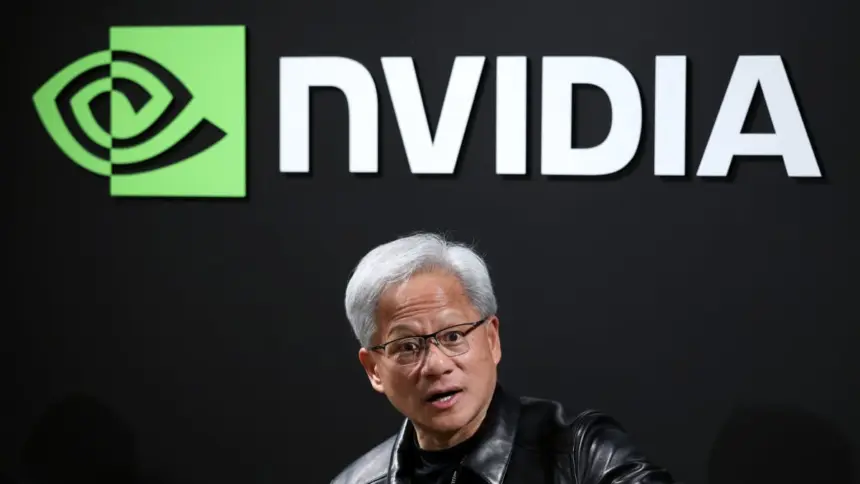
Nvidia directors met late on Wednesday to weigh a Jensen Huang ouster following reports of a second extramarital affair involving a company executive. The late-night meeting came after disclosures that the chief executive had maintained an unannounced personal relationship with a subordinate who directly reported to him.
The Wall Street Journal reported that directors were preparing to dismiss the co-founder, who has run the semiconductor business since its creation in 1993. Although the 11-member board held an evening session to review his position, The Next Web reported that directors concluded the night without publishing a verdict. The company’s shares sank by over 8% in extended trading on the news.
Pressure on Huang intensified after The Guardian and The New York Times detailed an extramarital relationship with Kimberly Powell, the company’s vice president of healthcare. Former employees told The New York Times that colleagues had observed the two displaying affection at a San Jose hotel during Nvidia’s annual developer conference in March. When asked about Powell by telephone, Huang told the newspaper, “I don’t think you should be talking to me directly,” before ending the call.
Why has the Kimberly Powell revelation altered the board’s stance?
The account of a relationship with Powell upended the board’s earlier posture. On Sunday, Huang sent an email to staff acknowledging infidelity to his wife of four decades. That memo followed disclosures that US intelligence officials suspected Alice Huang, an executive at Singapore data centre customer Megaspeed International, of gathering information for China’s Ministry of State Security.
Following that initial disclosure, directors probed the CEO’s conduct by hiring the law firm Wachtell, Lipton, Rosen & Katz, while offering public support for Huang’s leadership. The company stated over the weekend that it had found no indication that trade secrets or national security had been compromised. Beijing dismissed the espionage claims as groundless slander, and Huang told US President Donald Trump that he had been unaware of any ties to Chinese intelligence.
A romantic relationship with a direct subordinate raised immediate governance problems. Nvidia’s published code of conduct treats personal relationships as potential conflicts of interest and reminds managers that they serve as role models. Powell joined Nvidia in 2008, taking over healthcare operations in 2017 to manage accelerated computing products used in clinical analytics, medical imaging and drug discovery.
Who could replace Jensen Huang if he is ousted?
Under Nvidia’s corporate bylaws, a simple majority of directors can vote to remove the chief executive with or without cause. All 10 board members apart from Huang are designated as independent, including fellow co-founder Chris Malachowsky, who remains a director and company fellow after stepping back from executive duties more than a decade ago.
Huang’s operational reach makes an abrupt departure uniquely disruptive. He maintains an unusual management structure with dozens of senior staff reporting straight to his desk, and he personally holds approximately 870 million shares, representing a 3.6% stake. The company has operated under no other leader across its 33-year history and has never designated a formal successor.
Directors have turned to an executive recruitment firm to map out succession plans, The Economic Times reported. Chief Financial Officer Colette Kress has emerged as the most probable choice to step in as interim chief executive if Huang is ousted. Other senior insiders reporting to Huang include Andrew Bell, senior vice president of hardware engineering, and Ian Buck, who oversaw development of the CUDA software architecture that underpins the company’s AI market lead.
How has the leadership crisis impacted Nvidia’s stock and partners?
The sudden prospect of Huang’s departure prompted heavy selling across semiconductor markets. The stock had already fallen by roughly 10% earlier in the week following the initial controversy. A further after-hours slide of more than 8% meant the company shed about $600 billion in valuation relative to where it stood before the inquiry was announced on Sunday, down from its recent peak above $4 trillion.
“The market is starting to price Nvidia without its founder as the likely outcome, not a tail risk,” said Armina Rosenberg, portfolio manager at Minotaur Capital, an investment firm that owns Nvidia shares.
Reverberations spread to related technology stocks. In extended trading, Nasdaq futures slipped 1%, cloud provider CoreWeave dropped 6%, and memory supplier SK Hynix fell in Asian dealings. Conversely, competing semiconductor designers advanced, as AMD shares gained 4% and Broadcom rose 3%.
In Washington, lawmakers moved quickly to demand oversight. Republican Senator Kevin Cramer urged Huang to step down, CNBC reported. Democratic Senators Elizabeth Warren and Chris Coons wrote to the US Commerce Department and State Department requesting the retention of all records tied to Nvidia chip exports to China.
Industry partners also weighed in. Elon Musk stated on social media platform X that it would be an honour to hire Huang if he left Nvidia. SpaceX recently agreed a multi-billion-pound leasing commitment for Nvidia Vera Rubin processors, taking delivery of more than 200,000 graphics chips each month for its data centres.
Nvidia is scheduled to report its third-quarter financial results on 17 November, giving the board less than a week to settle its leadership dilemma before facing investors on its earnings call.