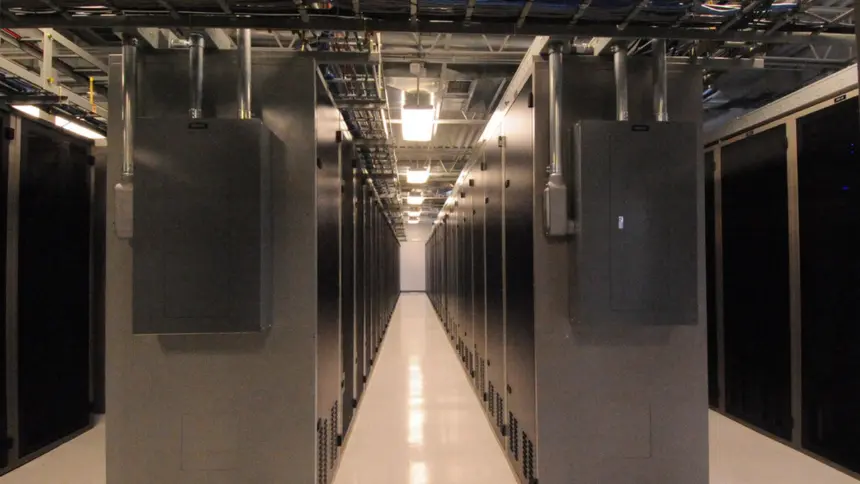
Big tech share buybacks fell 83% across five of the largest US technology groups during the first nine months of 2026, as record capital spending on artificial intelligence infrastructure wiped out free cash flow and pushed the sector into a collective deficit, according to financial data analysed by Reuters.
Key points
- Microsoft, Alphabet, Amazon, Meta and Oracle repurchased just $13.6bn of stock in the first nine months of 2026, down from $81.8bn a year earlier.
- Capital spending across the five firms doubled to $556.9bn, outstripping operating cash flow for the first time since 2011.
- The spending surge created a combined free cash flow deficit of $14bn, forcing companies to fund dividends and remaining repurchases through debt and equity sales.
- Alphabet and Meta stopped share buybacks entirely during the nine-month period after spending $66.5bn on repurchases in the same window of 2025.
Where the cash went
Between January and September, Microsoft, Alphabet, Amazon, Meta and Oracle directed 9.3% of their operating cash back to shareholders through repurchases and dividends. That represents the lowest proportion returned in at least 15 years, falling from 27.4% in the equivalent period of 2025.
A Reuters analysis of LSEG data and regulatory filings showed that the shift occurred despite record underlying cash generation. Operating cash flow across the five companies expanded 29% to $542.9bn during the nine-month span. However, their capital expenditure doubled over the same period to reach $556.9bn.
That volume of spending exceeded the cash produced by their commercial operations for the first time since at least 2011. The imbalance turned a combined free cash flow surplus of $143.5bn in 2025 into a net deficit of $14bn in 2026.

To absorb the shortfall, the companies cut share repurchases sharply. Total buybacks slid to $13.6bn from $81.8bn. Dividends, by contrast, remained steady and rose slightly, climbing from $33.9bn to $37bn across the group.
Alphabet and Meta pause repurchases
The retreat was uneven across the five hyperscalers. Alphabet and Meta halted buybacks completely throughout the first nine months of the year. In the same period of 2025, the two companies spent a combined $66.5bn buying back their own equity.
The suspension marks a sharp turnaround for Alphabet investors, who recently watched Alphabet shares slump after AI spending absorbed quarterly cash balances. Earlier trading had already shown market sensitivity when Alphabet shares plunged as AI search and capital spending climbed in tandem across consecutive reporting cycles.
Amazon maintained its existing stance. The retailer and cloud operator pays no dividend and has not conducted share buybacks since 2022. That left Microsoft responsible for nearly the entire sum of remaining stock repurchases among the group. Yet even Microsoft scaled back its programme, trimming repurchases to $4.4bn in the quarter ending in September from $5.7bn a year earlier.

How companies funded $50bn in shareholder payouts
Because free cash flow turned negative across the five companies, the $50.6bn they distributed via dividends and Microsoft’s repurchases did not come from surplus operating profits. Instead, the money came from existing balance-sheet reserves, debt offerings and share sales.
Amazon secured $48.1bn in long-term debt during the third quarter of 2026. The company can now borrow as much as $80bn against the physical computing hardware it buys for its data centres. Alphabet also turned to capital markets, bringing in approximately $29bn through fresh debt issuance and raising another $12.4bn from selling shares.
Share buybacks have served as a core pillar of equity returns for technology investors over the past decade. By retiring shares, companies concentrate net income across a smaller share count, which lifts earnings per share even during quarters where operating profit growth stalls.
An analysis by ING showed that Alphabet reduced its outstanding share count by 9.5% between the end of 2020 and the end of 2025. That reduction contributed approximately two percentage points per year to its reported earnings per share.
Ehren Stanhope, co-head of investment management at Franklin Templeton, pointed to a broader shift in corporate behaviour across Silicon Valley. “For the last 15 years, companies increasingly returned excess capital to shareholders through buybacks and dividends,” Stanhope said. “The current regime may increasingly be characterized by greater equity and debt issuance, a request of capital from investors.”
What the hyperscalers plan to spend next
Executive teams at all five companies argue that their heavy infrastructure investment will produce long-term commercial returns. Together, Microsoft, Alphabet, Amazon, Meta and Oracle hold more than $3tn in contractual commitments tied to artificial intelligence hardware, facilities and energy supplies.
Andy Jassy, chief executive of Amazon, told market analysts on Thursday that the group retains a clear line of sight to attractive economic returns from its computing build-out. Jassy added that Amazon expects to lift its capital expenditure even higher in 2027.
Oracle has also laid out long-range financial targets based on expanding cloud computing capacity. The database company told investors it aims to reach an annual free cash flow target of $30bn by 2029.