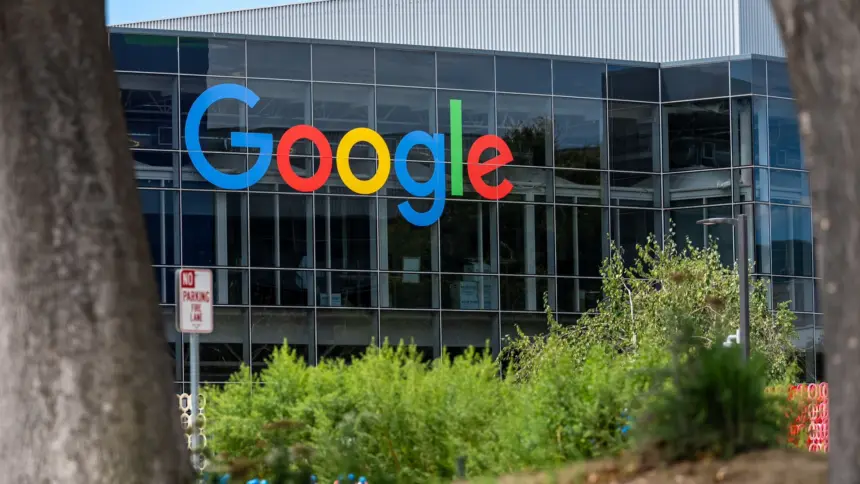
Alphabet shares slump by as much as 13 percent in morning trading on Thursday, 29 October 2026, putting the Google parent on track for its worst post-earnings drop since its 2004 stockmarket debut after a $9.07 billion quarterly cash burn and slowing search advertising revenue unsettled investors.
Key points
- Free cash flow plunged into negative territory at $9.07 billion for the July-to-September period, far exceeding the $2.70 billion deficit analysts had projected.
- Management kept its 2026 capital budget target steady at $195 billion to $205 billion, confirming plans to expand server clusters and data facilities.
- Search advertising revenue rose 12 percent to $63.35 billion but missed forecasts as search growth slowed and AI queries generated less ad revenue.
- Google Cloud beat expectations by generating more than $30 billion in revenue for the quarter.
Heavy capital spending drains cash reserves
The market sell-off began after Alphabet reported its Q3 financial results on Wednesday afternoon. While revenue climbed 25 percent compared with the previous year to nearly $128 billion, net income dropped by almost $9 billion to just above $26 billion. Earnings per share landed at $2.12, missing the Wall Street consensus estimate of $3.02 by ninety cents.
The central driver behind the drop in profitability was the cost of running and expanding computing infrastructure. A quarterly cash burn of $9.07 billion pushed free cash flow deeply into negative figures for the three months to September. Wall Street analysts had forecast an outflow of $2.70 billion. The deficit highlights the immediate cost of constructing specialist data centres, buying power equipment, and purchasing tens of thousands of artificial intelligence chips to support internal research and commercial services.
Chief executives across the technology industry have faced questions about when these outlays will turn into operating profits. Despite the cash drain, Alphabet reiterated that it will not trim its near-term investment budget. The company kept its 2026 capex projection fixed between $195 billion and $205 billion, while warning that computing outlays will climb even higher next year.

Search ad growth decelerates under AI transition
Investor unease extended beyond capital expenditure to the core advertising engine that funds Google. Search advertising revenue rose 12 percent to $63.35 billion, falling short of analyst targets. Search revenue growth also demonstrated a clear downward trend across 2026. Alphabet posted 19 percent expansion in search during the first quarter and 17 percent in the second quarter before dropping to 12 percent in the third quarter.
Part of this deceleration stems from structural shifts in how internet users look up facts. Alternative conversational tools, including OpenAI‘s ChatGPT and Anthropic‘s Claude, have diverted some query traffic away from standard web browsers. Google has pushed its Gemini models into core search through features such as AI Overviews and an experimental AI Mode, but those formats currently produce lower returns than standard search results.
Philipp Schindler, chief business officer at Alphabet, acknowledged during the earnings call that the company generates less money per interaction inside AI-powered formats. Schindler said the hit to search was partly due to lower monetisation in AI Mode, where the layout contains fewer commercial links and display advertisements cost less for brands to run. Schindler said Alphabet is now expanding ad placements across AI Overviews and AI Mode in international markets to narrow the revenue gap.
Microsoft shows contrast in infrastructure management
Trading on Thursday showed a sharp division between the two biggest cloud and AI competitors. While Alphabet plummeted by 12 to 13 percent, Microsoft shares traded flat. The divergent reaction came down to how each business managed capital spending and preserved cash balances over the three-month period.

Microsoft reported $45.2 billion in capital expenditure and finance leases during its third quarter. That figure represented a 30 percent increase over the previous year, yet it remained below the $50.67 billion that Wall Street projected. Microsoft’s free cash flow contracted 27 percent to $18.63 billion, remaining positive and reassuring investors who worried about unchecked server budgets.
Ben Barringer, global head of technology research at Quilter Cheviot, pointed out that difference in an analyst note on Thursday. Barringer said Microsoft handled its engineering outlays in a controlled fashion that limited surprises, whereas Alphabet presented what he described as messy earnings coupled with an unconvincing presentation to the market. Barringer argued that Google faces a classic innovator’s dilemma between shielding traditional search margins and embracing conversational automation, leaving its Gemini platform lagging behind rivals on automated task execution.
Cloud strength cushions hardware costs
The earnings report was not entirely negative for Alphabet. Google Cloud remained a bright spot, posting quarterly revenue above $30 billion. That performance beat analyst projections by roughly $1 billion, as corporate customers continued to rent computing capacity, databases, and enterprise machine learning tools.
Some market observers argue that Google’s broader scale will protect it as engineering teams refine ad delivery within AI products. Scott Devitt, an equity analyst at Rosenblatt Securities, said on business television that the current monetisation dip is an industry-wide challenge for large language models rather than an existential threat to Google. Devitt pointed out that Alphabet can draw on an existing audience of four billion search users as it transitions consumers to conversational tools.
Kate Moore, chief investment officer at Citi Wealth, also maintained a positive outlook on the sector despite the quarterly miss. Moore said she remains constructive on major technology companies and the broader American economy, pointing out that long-term enterprise demand for computing capacity and cybersecurity systems remains steady even as individual quarters show volatile cash swings.
What happens next for Alphabet?
Thursday’s drop could set a company record if sustained through the market close. Alphabet’s worst previous post-earnings share reaction occurred in 2004, when the stock fell 9.77 percent. A closing decline greater than that mark would represent the steepest single-day earnings drop in the group’s 22-year history as a publicly traded company.
Google executives must now prove to shareholders that higher infrastructure spending will deliver higher revenues before cash reserves deteriorate further. The immediate test will arrive in the fourth-quarter holiday shopping period, when the company plans to introduce commercial sponsored links to AI Overviews in multiple overseas markets.