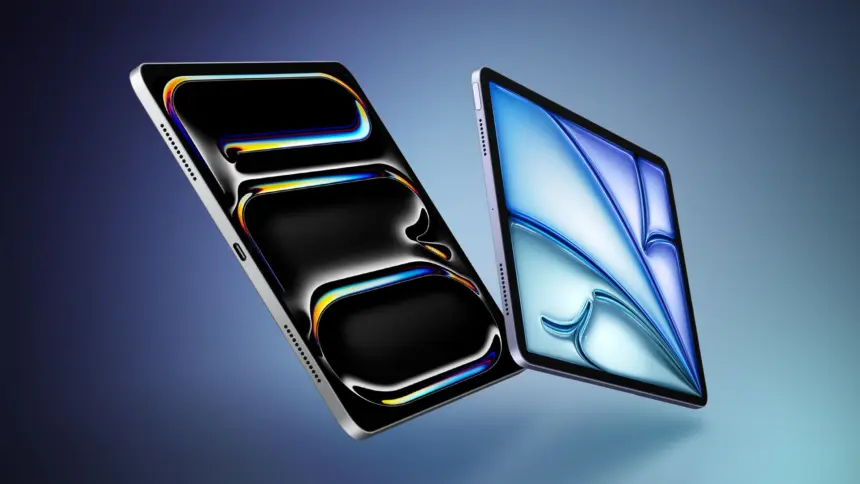
Apple plans to release an OLED iPad Air alongside an upgraded iPad Pro and a refreshed entry-level tablet in the first half of 2027, according to reporting from Bloomberg published on Sunday. The upcoming tablet hardware follows display and silicon updates introduced across Apple’s portable lineup in late 2026.
Key points
- Apple plans to introduce new versions of the iPad Air, iPad Pro, and entry-level iPad in the first half of 2027.
- The next iPad Air will adopt an OLED screen and is expected to run on Apple’s M5 processor.
- The flagship iPad Pro will gain an M6 processor alongside a vapour chamber cooling system for sustained workloads.
- The entry-level iPad 12 will feature an A19 chip to bring Apple Intelligence features to the lowest-priced tablet.
The planned 2027 tablet lineup
Mark Gurman reported the revised release schedule in his weekly Power On newsletter for Bloomberg on 1 November 2026. The three planned tablets represent the next phase of Apple’s tablet modernisation after the company closed out its 2026 hardware calendar.
Apple updated the iPad mini in October 2026, equipping the small tablet with an OLED panel. That release marked the final tablet launch of the year. The remaining three models in the iPad family will wait until the first six months of 2027 for their next hardware revisions.
The staggered calendar gives Apple time to align component manufacturing across multiple display suppliers. By spreading updates across separate quarters, the company avoids concentrating display and silicon demand on a single production window.

Display upgrades and the shift to OLED
The headline change for the mid-tier tablet is the arrival of an OLED panel on the iPad Air. Apple previously reserved organic light-emitting diode screens for the iPad Pro line before bringing the technology to the compact tablet in October.
Industry watchers tracked the progression closely during video analysis of the OLED iPad mini, where richer contrast and lower power draw replaced traditional liquid crystal displays. Bringing the same panel technology to the iPad Air will standardise display quality across most of Apple’s consumer tablets.
Under the bonnet, the updated iPad Air is expected to adopt Apple’s M5 processor. Moving from the existing M3 generation to the M5 will provide a lift in graphics throughput and on-device neural processing without altering the exterior footprint of the chassis.
The expansion mirrors broader display changes across Apple’s personal computers. The company held closed briefings in Los Angeles in late October covering briefings on touchscreen OLED hardware, signalling an ongoing transition away from legacy LCD screens across several product categories.

Thermal changes and the M6 iPad Pro
Apple’s premium tablet will take a different technical path in early 2027. Gurman reported that the next iPad Pro will use an M6 processor, paired with a custom vapour chamber cooling system designed to manage heat under heavy processing loads.
Vapour chamber systems use a flat, sealed metal container holding a small amount of liquid. When the processor heats up, the liquid vaporises, spreads across the chamber, condenses against cooler surfaces, and returns via capillary action. This mechanism spreads thermal energy far more evenly than solid copper or graphite heat spreaders.
Sustained performance remains a priority for professional users who run complex video rendering and audio production workflows on tablets. Thin enclosures often force processors to throttle clock speeds quickly when temperatures rise. The combination of improved cooling and the M6 architecture aims to keep performance stable during extended sessions.
The chip transition lines up with Apple’s wider silicon roadmap, which surfaced during recent discussions of Apple’s M6 processor roadmap ahead of planned Mac updates.
Apple Intelligence on the entry-level iPad
The cheapest model in the range, the twelfth-generation iPad, will receive updates aimed directly at software compatibility. Previous reports indicate the tablet will move to an A19 application processor, replacing the older silicon in the current base model.
The A19 inclusion matters primarily for software capability. Apple Intelligence requires at least an A17 Pro or an M-series chip to run local models on device. Putting an A19 into the entry-level iPad ensures that the company’s entire tablet catalogue can run its generative artificial intelligence features by mid-2027.
Networking hardware will also see revisions. The iPad 12 is slated to feature Apple’s N1 wireless chip, adding support for the Wi-Fi 7 standard to improve data transfer rates and reduce latency on crowded local networks.
Cellular configurations of the entry-level device are expected to incorporate Apple’s in-house C1X modem. The custom baseband component focuses on power efficiency, reducing the battery drain associated with mobile data connections while reducing Apple’s reliance on external chip suppliers.
Supply timing and hardware context
The 2027 tablet rollout follows a turbulent autumn hardware season for Apple. In late October, the company gathered media in Los Angeles to preview touchscreen MacBooks and new smart home equipment, while wrestling with component bottlenecks elsewhere in its portfolio.
Apple ran into manufacturing hurdles with the newly announced iPhone Duo. Gurman reported that Apple went ahead with pre-orders on Friday despite knowing it faced severe supply constraints, calling the choice a “major mistake” given the thin retail inventory available at launch.
By scheduling the iPad Air, iPad Pro, and entry-level iPad for the first half of 2027, Apple creates a buffer to stabilise manufacturing lines and secure display yields. Production schedules for the new tablets will firm up over the coming months as suppliers prepare assembly lines for early 2027 distribution.