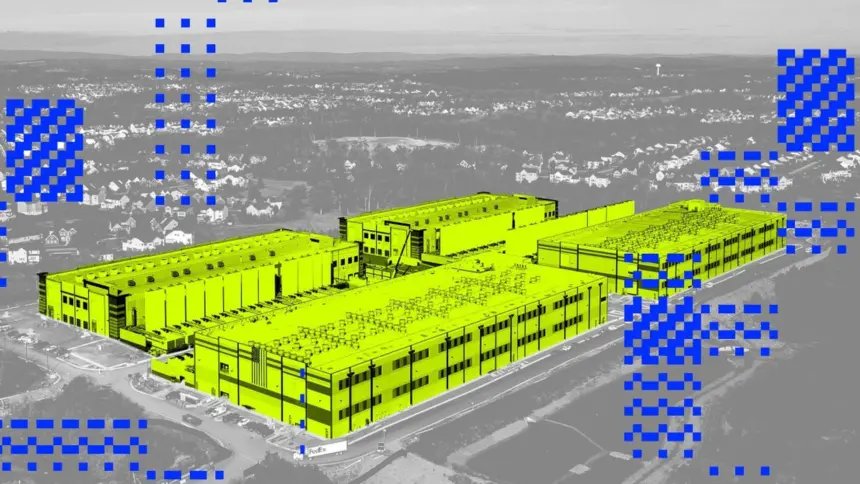
Proposition 45 has come under intense scrutiny across California ahead of the November 2026 vote, as environmental groups and legal analysts warn that its expedited permitting rules for essential infrastructure could allow artificial intelligence data centre developers to bypass normal regulatory scrutiny and restrict community legal challenges.
Key points
- Proposition 45 sets strict deadlines on state environmental reviews and limits court powers to halt contested developments.
- Opponents argue language defining broadband internet infrastructure could allow commercial data centre operators to qualify for streamlined permitting.
- Supporters maintain the initiative targets public infrastructure such as clean energy and housing, pointing out that data centres are not explicitly named.
- The measure splits traditional allies, winning backing from regional civil rights leaders while facing opposition from conservation groups.
How Proposition 45 alters California environmental reviews
California voters are preparing to decide on Proposition 45, a ballot measure designed to accelerate the construction of state infrastructure by curbing requirements under the California Environmental Quality Act, known as CEQA. The initiative establishes rigid time limits for environmental assessments and curtails legal remedies available to nearby residents.
Under current CEQA rules, public agencies conduct extensive reviews to identify environmental and health hazards. Agencies work with developers to establish alternatives and mitigate harm, while public comment periods have established minimum durations rather than fixed cut-offs.
Proposition 45 changes that framework by imposing a 365-day deadline on state agencies to finish environmental impact reports for qualified projects. The proposal also restricts public comment to a maximum of 45 days and requires the judicial system to resolve all legal challenges within 270 days.

The proposition alters how project alternatives are evaluated. Rather than regulators designing alternative plans to limit public damage, developers would submit a single alternative project plan for state review. In addition, regulators would lose the authority to make repeated requests for supplementary details, requiring agencies to specify all necessary disclosures at the start of an application.
Tribal consultation rules would also change under the initiative. Regulators would only need to consult Native American tribes that hold formal federal recognition. Under existing CEQA regulations, agencies must consult all affected tribes, regardless of whether they have recognized government-to-government relations with the federal administration.
The measure also limits judicial authority during environmental lawsuits. If a state court determines that regulators failed to follow environmental rules, judges could no longer halt an entire development. Courts could only pause specific non-compliant building segments while the remainder proceeds.
The broadband clause and data centre classification
The core dispute centres on whether AI data centres fall within the definition of infrastructure eligible for these relaxed rules. Proposition 45 identifies nine categories of essential developments, covering areas such as power generation, water transport, and broadband internet access.

The measure defines broadband projects as facilities providing retail transmission capability to customers across the state to send and receive data across internet endpoints. The statutory language covers infrastructure incidental to and enabling communications services.
Legal scholars Richard Frank, professor emeritus at UC Davis School of Law, and attorney Matthew McKerley argued in the Daily Journal that commercial data centres handling internet traffic and cloud services could use that wording to secure fast-track approvals. Because large server facilities incorporate extensive fibre-optic and transmission equipment, operators could claim essential broadband status.
Frank and McKerley also noted that developers building enterprise data facilities have contributed hundreds of thousands of dollars to committees backing Proposition 45. While the measure explicitly excludes nuclear power and dial-up connectivity from fast-track treatment, it does not exclude data facilities.
Fernando Gaytan, a senior attorney at environmental legal charity Earthjustice, warned that developers will attempt to use these broad terms. Gaytan told The Verge that companies will seek to classify facilities as essential projects, adding: “Communities get cut out of the conversation.”
Campaigners for Proposition 45 reject that interpretation. Attorney and lobbyist Kurt Oneto writes in the National Law Review that data centres do not provide mass-market retail communications and cannot qualify under the statute. Backers state the proposition aims to solve the California housing shortage and speed up green energy projects needed to supply growing municipal power grids.
Political divisions and community concerns
The fight over Proposition 45 has divided groups that frequently coordinate on planning and civil rights matters. The California and Hawaii State Conference of the NAACP has endorsed the ballot measure, pointing to the slow pace of community development projects in urban areas.
Rick Callender, president of the regional NAACP conference, defended the proposition in a campaign press release: “Prop. 45 is about accountability, not shortcuts, creating a smarter process that gets these projects built sooner while protecting civil rights and environmental safeguards.”
That endorsement contrasts with national civil rights resistance against server hubs. Data infrastructure has emerged as an election flashpoint in US midterm campaigns, driven by public anger over local water consumption, diesel generators, and rising utility rates.
Outside California, other branches of the NAACP have fought commercial computing expansions. The national legal team filed suit against xAI over unpermitted gas turbines powering facilities in Tennessee, leading to an active federal lawsuit over gas turbine pollution. In the south, the organization’s Texas chapter formally demanded a statewide moratorium on new server farm construction.
Opponents of Proposition 45 argue that weakening CEQA removes one of the few legal mechanisms neighbours possess to examine electrical substation loads and backup generator emissions before construction begins. Because the measure bars total project injunctions, developers could erect shell structures while legal appeals work through the courts, making finished sites difficult to dismantle.
What happens next
California voters will cast their ballots on Proposition 45 on 3 November 2026. If the initiative receives a majority of votes, its provisions will take effect five days after the secretary of state certifies election results in December.
Should the measure pass, municipal planners expect early test cases in Silicon Valley, Sacramento, and the Inland Empire, where developers have queued power applications for facilities designed to train and serve generative AI models. Local planning boards would then have to decide whether commercial server centres qualify as essential broadband projects under the revised statute.