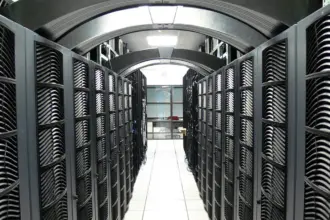
Voters and local political campaigns across the United States have turned AI data centres into a sharp election issue ahead of the midterms on 3 November 2026. Mounting anger over soaring electricity use, water consumption and opaque planning deals has already stalled nearly $200 billion in facility developments nationwide this year.
Key points
- Opposition to rapid computing infrastructure expansion has become a major ballot-box issue across several competitive US midterm races.
- Industry data shows nearly $200 billion worth of facility projects were blocked, stalled or delayed during the first half of 2026.
- Residents and local leaders in states including Virginia and Pennsylvania cite rising utility bills, health worries and secretive zoning agreements.
- While building trade unions point to short-term construction employment, voters increasingly question whether permanent benefits ever materialise.
The $200bn pipeline freeze
The political friction surrounding artificial intelligence has moved from federal antitrust hearings into county halls and town squares. While tech executives in Silicon Valley promote the broad societal gains of foundation models, municipal candidates are fielding complaints from residents who see massive server facilities encroaching on residential areas and green spaces.
A study by research group Data Center Watch revealed the financial scale of the pushback. In the first six months of 2026, communities and local authorities delayed, stalled or blocked almost $200 billion in planned computing facilities across the country. Financial outlets have compiled data showing $200 billion in stalled construction, underscoring that municipal opposition is now a direct bottleneck for technology infrastructure budgets.
The scale of public resistance mirrors wider investor nervousness over capital expenditure. Hyperscale operators have committed tens of billions of dollars to land acquisitions, backup generators and high-voltage transmission lines. Wall Street analysts have already scrutinised those outlays, particularly after recent quarters where tech stocks slid on AI capex concerns as returns on cloud computing hardware proved slower to arrive than anticipated.
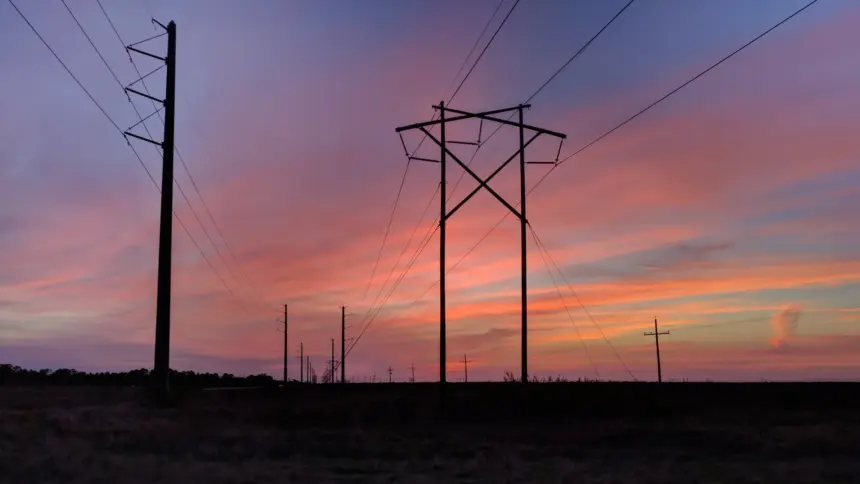
Now, political risk is complicating those balance sheets. In Virginia, which hosts the highest concentration of computing facilities in the world, developers have hundreds of additional campuses in planning stages. Lawmakers in Richmond, as well as state capitals in Pennsylvania, Georgia, Texas and New York, are currently debating statutory guardrails to force developers to disclose their power demands and water cooling consumption before breaking ground.
Why are voters pushing back?
At community forums and campaign events, the primary complaint from voters centres on a perceived lack of consent. Big technology firms frequently negotiate economic development agreements and tax abatements under non-disclosure pacts with county commissioners, leaving neighbours unaware of a project until commercial zoning permits are granted.
Advocacy groups tracking land development have pointed out that existing guidance on local zoning rules is ill-equipped for buildings that consume as much electricity as small cities. Because local codes often classify massive server complexes as light industrial or commercial office space, developers have bypassed the public reviews usually required for power plants or heavy manufacturing works.
Environmental advocates argue that hosting these sites carries tangible costs for nearby households. At an election forum held by media group Newsreel in New York, panel speakers described how utility companies pass the cost of grid upgrades and sub-station expansions directly on to domestic ratepayers through higher monthly bills.

Hilary Flint, an environmental and public health campaigner, said residents protest because they “value their lives a little bit more than a temporary check.” She argued that neighbouring communities are often left to manage diesel generator exhaust, round-the-clock cooling fan noise and depleted water tables long after initial building subsidies are spent.
The cultural friction has grown just as visible. Outlets exploring the cultural tensions around computing hubs have documented how sprawling windowless warehouses alienate rural and suburban populations. In Southern California, immigrant neighbourhoods have organised local petitions and placed yard signs depicting mythical beasts strangling server buildings to oppose incoming sites.
Jobs and the industrial debate
Candidates on both sides of the aisle are finding it difficult to assemble a standard party line on data centre construction.
Once construction ends, however, an operating server building requires relatively few permanent staff. In industrial districts and Rust Belt towns where voters remember factories that once employed thousands of local workers, the trade-off is proving hard to sell.
Political organisers say that disconnect is driving grassroots scepticism. During midterm debates in Ohio, speakers who defended computing halls as symbols of regional manufacturing revival faced vocal opposition from the audience. Residents noted that the facilities consume local resources without replacing the generational employment that traditional industrial plants once offered.
Legal disputes over infrastructure are already escalating through the courts. In Tennessee, a contested site operated by Elon Musk’s AI venture faced formal challenges over local environmental permitting, leading to an active xAI data centre lawsuit after a federal judge rejected the company’s bid to dismiss the case. Similar disputes are now emerging across the Midwest and the Sun Belt.
What comes next for tech policy
The emergence of compute infrastructure as an election topic indicates that artificial intelligence policy is shifting from theoretical risks to tangible resource distribution. Rather than debating model weights or copyright rules, voters are asking state representatives who pays for electrical sub-stations and who profits from land conversions.
Jack Brewster, the founder of Newsreel, observed that the issue cuts across traditional political divisions. He said, “AI has become an election issue for regular voters.” Brewster noted that while rural communities focus on land rights, grid reliability and fears of workforce displacement, urban voters concentrate on whether tech executives receive undue tax breaks from local councils.
Some municipal officials are responding by proposing direct corporate accountability. New York City Council member Chi Ossé told an audience that technology executives should face mandatory congressional testimony when their products disrupt civic stability, while calling for tighter taxation on computing wealth.
With ballot results set to reshape state legislatures across the country on 3 November, developers will face a less accommodating planning environment. Whichever parties win control of state assemblies in Virginia, Pennsylvania and Georgia, new bills requiring public utility hearings, grid protection fees and strict zoning limits are scheduled for debate as soon as legislative sessions open in January.