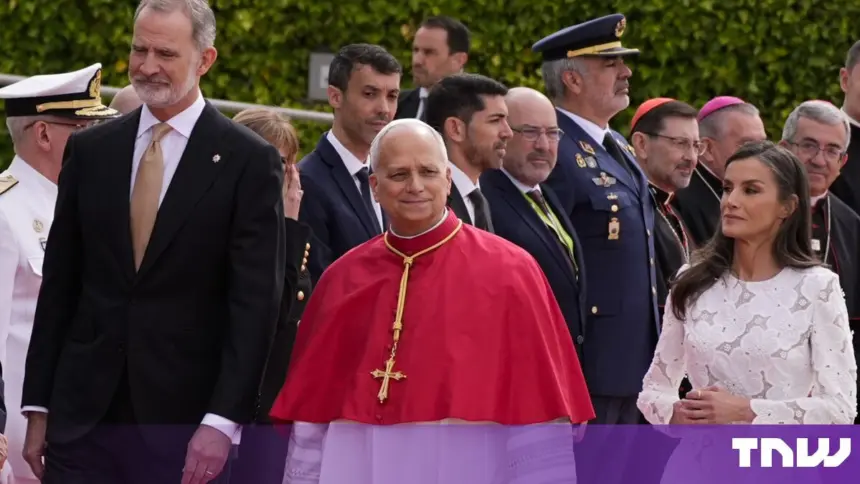
Pope Leo XIV has demanded an international ban on autonomous AI weapons, warning delegates at the Vatican that machines must never hold the power to decide human life or death. The pontiff delivered the warning on Friday in Rome ahead of United Nations disarmament discussions in Geneva.
Key points
- Pope Leo XIV urged delegates to prohibit autonomous weapons before UN negotiations convene in Geneva this month.
- The Vatican rejected proposals to grant artificial intelligence systems legal personhood or rights.
- Leo demanded binding international bodies to enforce accountability rather than relying on non-binding ethical pledges.
- The statement follows public disagreements between the Vatican and European AI leaders over military software.
The call to disarm AI systems
Speaking in the Consistory Hall of the Apostolic Palace, Pope Leo addressed delegates gathered for an artificial intelligence conference co-hosted by the Pontifical Academy for Life and the Future of Life Institute. In an address published by the Vatican, he insisted that sovereign states must maintain human control over the use of force, border management, and judicial liberty.
Leo argued that delegating critical choices to software reduces human beings to mere statistical records. The pontiff highlighted targeting rosters and automated border control databases as primary examples of software misuse where individual dignity is stripped away.
He stated that engineers and policymakers must subordinate technical capability to human welfare. “The decisive question, then, is not simply ‘What can AI do?’ but rather, ‘What purpose should it serve?’” he said.

Treating technological progress as an uncontrolled race creates severe social risks, Leo warned. A dependable, limited model whose behaviour engineers can foresee remains more valuable than a powerful architecture whose consequences nobody can control.
Rejection of legal personhood
The Vatican also took aim at legal theories proposing that autonomous systems receive independent legal personhood or protections. Leo rejected such proposals directly, describing machines strictly as instruments made by human hands.
Shielding software behind corporate or legal fictions dissolves moral responsibility, according to the pontiff. “Such an approach risks obscuring human responsibility and leaving those who suffer harm to confront a faceless entity,” he said.
Legal scholars and software developers have debated whether assigning liability to algorithmic entities could streamline industrial litigation. Leo rejected that framing, insisting that human operators, executives, and designers must retain complete moral and legal responsibility for systemic failures.

Geneva negotiations and institutional oversight
The diplomatic appeal comes as national delegations prepare to meet in Switzerland. States discuss military robotics under the United Nations Convention on Certain Conventional Weapons, whose Seventh Review Conference will take place from 16 to 20 November, according to non-governmental organisation Reaching Critical Will.
Leo argued that voluntary industry codes and philosophical statements have exhausted their utility. What governments require now are formal international bodies capable of enforcing real standards on automated military software.
The Pope called for multilateral organisations to set uniform technical thresholds, independent inspection regimes, and enforceable channels of judicial accountability. Technical standards alone cannot prevent abuse without independent monitoring across national borders.
Industry clash over military software
The speech reinforces a campaign the Catholic Church has pursued across recent papacies. During an address to the G7 in 2024, Pope Francis argued that lethal autonomous software represented a moral failure, saying no machine should ever take human life.
Leo anchored Friday’s demands in Magnifica Humanitas, his foundational encyclical on artificial intelligence published in May. In that text, the pontiff described automated warfare as an escalatory path toward annihilation.
The Vatican’s growing involvement in defence policy has drawn direct resistance from tech executives building sovereign capabilities in Europe. Arthur Mensch, chief executive of French frontier laboratory Mistral, previously rejected the Vatican’s critiques of military computing, arguing that automated systems remain necessary for modern national defence.
Leo addressed broader industry pushback in September, when he publicly dismissed claims that technical safety concerns were exaggerated or misleading. The UN review conference in Geneva will test whether diplomatic envoys share the Vatican’s urgency when talks begin on 16 November.