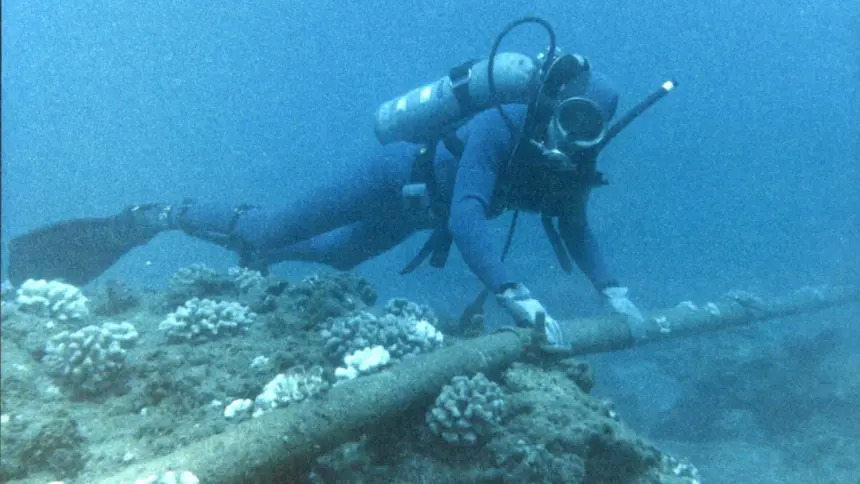
The European Union has committed €107 million to help construct an Arctic undersea cable connecting mainland Europe directly to Greenland. Outlined in an Arctic policy paper, the initiative seeks to establish independent telecommunications routes to North America and East Asia that completely bypass United States territorial waters and terrestrial digital networks.
Key points
- The European Commission allocated €107 million ($119 million) to Greenland telecoms and the Pan-Arctic cable plan.
- The proposed line would run from Europe to Greenland and Canada, with future phases extending to Japan and South Korea.
- Brussels has proposed an Arctic Cable Hub to coordinate surveillance, physical defence and emergency repairs across polar waters.
- The initiative offers an alternative to vulnerable bottlenecks in the Red Sea, the Baltic Sea and Russian coastal routes.
Funding and route design
The European Commission designated the Pan-Arctic Cable as a strategic priority in an Arctic policy paper published on 20 October 2026. The initial funding commitment of €107 million will support Greenland’s secure digital infrastructure and fund early planning work for the direct subsea link.
European businesses, academic research bodies and Greenland’s national telecommunications operator have already signed an agreement to advance the project. Their plan calls for laying deep-sea fibre lines across the North Atlantic to Greenland, followed by a secondary western link to Canadian shores.
From Canadian landing stations, European planners envision extending the network across northern waterways toward major East Asian hubs in Japan and South Korea. This northern corridor would provide high-capacity digital transit without relying on traditional landing points in the contiguous United States.

The project runs alongside other independent European schemes designed to reshape transatlantic data traffic. Bulk Infrastructure began seeking a Canadian majority partner in September 2026 for its Leif Erikson cable, a separate commercial system intended to connect Norway directly to Canada.
Why Europe wants to bypass US networks
The decision to fund polar subsea routes marks a significant shift in European telecommunications strategy. European governments have spent recent years assessing their exposure to foreign regulatory regimes, physical bottlenecks and overseas digital surveillance.
Relying on US transit points subjects international data to American jurisdiction and domestic data-access laws. By establishing direct connections to Greenland, Canada and East Asia, European institutions aim to retain full sovereign oversight of their critical digital traffic.
Elisabeth Braw, a senior fellow at the Atlantic Council, observed that strategic priorities have overtaken purely commercial calculations. “It is interesting that this project is even being considered, because five years ago it would have seemed like not a particularly commercially attractive proposition,” Braw said.

Geopolitical calculations have altered those economics. “We are going to see more cables that connect friendly countries, and then you have to figure out how you can connect friendly countries without going through unfriendly countries’ exclusive economic zones or territorial waters,” Braw said.
Vulnerabilities in existing maritime corridors
The push into Arctic waters reflects mounting European anxiety over existing subsea choke points. Currently, more than 90% of all data traffic between Europe and Asia relies on undersea cables routed through the Red Sea.
Recent disruptions around the Bab al-Mandeb Strait have highlighted how easily regional conflict can threaten global connectivity. Cable cuts in shallow maritime passes can take months to repair when regional unrest prevents specialised engineering vessels from operating safely.
European waters have faced their own physical threats. Officials across northern Europe have cited several episodes where commercial vessels severed fibre lines in the Baltic Sea by dragging anchors across the seabed for long distances.
Military tensions in the north have also increased. NATO forces confronted Russian submarines during naval exercises off the Norwegian coast in spring 2026, underlining the persistent risks facing northern seabed infrastructure.
Earlier attempts to build alternative Arctic routes through Russian waters collapsed due to political friction. The Arctic Connect project, which aimed to lay a subsea cable between Europe and Asia along Russia’s northern shoreline, was abandoned in May 2021.
Icebreakers, costs and Arctic logistics
Laying and servicing fibre optic lines in polar seas introduces severe operational challenges. Arctic waters present heavy sea ice, shifting floes and extreme cold that standard cable-laying vessels cannot handle.
Contractors will require escort support from heavy icebreakers throughout installation. Specialised ships must carve operational paths through frozen surface waters and shield cable drums from low temperatures that can make subsea sheathing brittle.
Maintenance presents similar complications. When an undersea line faults or suffers physical trauma, repair ships typically take days to reach the site, grapple the cable, splice replacement sections and lower it back down. In the Arctic, thick ice cover can delay repair operations by weeks or months until icebreaking support arrives.
These extreme operating conditions will increase capital and operational expenditure far beyond the typical costs of temperate Atlantic installations. European officials argue the strategic insurance provided by an alternative route outweighs the steep logistical price tag.
Monitoring and the Arctic Cable Hub
To address maintenance and security risks, the European Commission proposed establishing an Arctic Cable Hub. The body would oversee regular monitoring, physical protection and rapid repair coordination for European lines operating in the far north.
The EU strategy document recommends embedding automated sensors directly inside the cable housings. These internal monitoring systems allow network operators to detect anomalous seabed activity, acoustic shifts and mechanical tension, providing early warnings before a physical rupture occurs.
Formal technical assessments and route surveys will continue through 2027, as European authorities coordinate with Canadian officials and Greenland’s telecom authority to finalise landing points and environmental clearances.