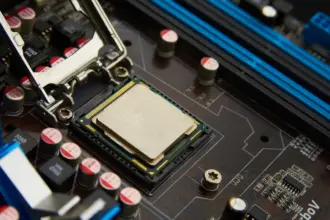
A sophisticated HBM memory smuggling network is bypassing United States trade restrictions by bonding advanced memory stacks to weak server processors, shipping them through Hong Kong and desoldering them inside mainland China to supply domestic artificial intelligence developers such as Huawei, The Information reported.
Key points
- Brokers exploit an exemption in US export controls by combining restricted High-Bandwidth Memory with low-grade processors to beat compute thresholds.
- Smuggled packages are transported through Hong Kong into mainland workshops, where workers melt the solder to salvage memory stacks and discard the logic chips.
- Black-market prices for HBM3E have climbed to roughly $4,000 per stack, pushing the memory cost of a single AI accelerator up to $32,000.
- Huawei is directing customers to secure their own memory chips ahead of its Ascend 960DT launch because domestic fabricators cannot meet production volumes.
How the packaging loophole works
United States trade rules prohibit South Korean manufacturers from exporting standalone High-Bandwidth Memory to Chinese entities. However, regulatory updates published in December 2024 left a critical opening by exempting memory units that are already bonded to logic processors. Under those standards, border controls evaluate the technical threshold of an entire package using the compute power of the primary processor rather than the memory bandwidth alongside it.
Brokers have turned that administrative distinction into an active supply pipeline. Operators establish front businesses registered as standard chip design firms to place orders for premium HBM3E modules. These companies simultaneously design logic chips that are engineered to be underpowered and cheap, ensuring their processing performance stays well beneath the threshold set by US sanctions.
One operator documented in the reporting runs a firm that functions on paper as a conventional design house. The smuggler, a man in his forties who speaks fluent Chinese and Korean and spent years working in the South Korean semiconductor industry, designs chips with compute levels so low that no data centre operator would consider buying them. The weak processors exist only to give the firm a commercial reason to purchase top-tier memory stacks from suppliers.
Specialised packaging contractors in Taiwan, South Korea and Southeast Asia then attach the memory stacks to the processors on common substrates. Customs officials clear the completed assemblies under the classification code of the low-end logic processor. Once approved, freight carriers move the hardware into Hong Kong.
The desoldering workshops in Shenzhen
From logistics hubs in Hong Kong, couriers move the bonded components into mainland China along informal transit routes. Transporters carry the hardware through checkpoints in hand luggage, car boots and the bags of daily cross-border commuters. The shipments end up in makeshift facilities across electronics trading hubs in Shenzhen.
Technicians inside these workshops heat the assemblies on hot plates or under industrial heat sources until the micro-solder connections liquefy. Once the bonds melt, workers pry the high-value memory units away from the substrate, clean the terminals and discard the logic chips. The host processors are thrown into scrap bins because their only utility was securing export clearance.
The recovery process carries substantial technical hazards. Heating the layered packages too quickly or unevenly can warp the silicon dies or fracture the micro-connections running through the dynamic random-access memory stacks. Handlers accept regular component losses because black-market markups easily cover the cost of broken parts.

Distribution of the recovered hardware runs through local networks. One broker in Shenzhen, who is in his early twenties and has spent three years trading semiconductors, receives the desoldered memory. He began his career at a technology company, where he built relationships with contacts who understand how to pull memory allocations out of legitimate supply pipelines. When questioned about his activities, the broker rejected the idea that he was a smuggler, arguing that his trade makes a necessary contribution to his country.
Rising black-market costs for AI hardware
Export barriers have driven steep price inflation across unofficial electronics markets in southern China. Brokers in Shenzhen report that single HBM3E stacks, which cost a few hundred dollars on legitimate international markets twelve months ago, now trade for approximately $4,000 each.
Modern artificial intelligence accelerators require six to eight HBM stacks running alongside the main silicon die. Sourcing the memory units on the black market now costs between $24,000 and $32,000 for a single chip assembly, before factoring in board design, server chassis, cooling systems and power delivery.
The grey market relies heavily on components diverted from Samsung Electronics and SK Hynix. Together, the two South Korean semiconductor companies produce more than 80 percent of global High-Bandwidth Memory output. Industry analysts have warned that AI memory shortages across enterprise infrastructure will linger for years, creating intense competition for available allocations. At the same time, volatile market swings and cooling AI memory demand in secondary segments have created grey-market opportunities for brokers seeking excess enterprise stock.
In addition to harvested memory components, fully assembled enterprise accelerators are also penetrating regional controls. Unofficial distributors have managed to move restricted hardware, including Nvidia’s advanced B300 systems, into mainland facilities through similar transit intermediaries.
Huawei pushes procurement to buyers
The growth of clandestine procurement comes as Chinese technology companies run into hard limits with domestic memory fabricators. Huawei intends to introduce its Ascend 960DT processor early next year, a model designed to double the compute speed of its current AI hardware. However, domestic foundries cannot manufacture reliable HBM stacks in the volumes required for full production.
To work around the deficit, Huawei has instructed selected customers to obtain their own memory stacks on the open market, shifting the responsibility of finding restricted parts onto corporate buyers. Buyers must deliver their own batches of memory before Huawei will package and deliver complete server units.
To supplement supply, mainland firms are also pulling memory from older Nvidia processors and securing surplus inventory from international design teams that scrapped chip projects or cancelled production runs.
South Korea steps up customs enforcement
South Korean authorities have increased inspections to halt the flow of restricted electronics through international transport routes. South Korea’s customs service reported that detected trade infractions reached $560 million by May, surpassing the previous record recorded across an entire calendar year.
Roughly one-third of the seized goods involved strategic technologies, primarily microprocessors and high-performance memory exported without statutory permits or shipped under fraudulent cargo declarations. Smuggling rings frequently direct shipments through multiple intermediary firms across Southeast Asia before consolidating them in Hong Kong.
United States trade regulators have not said whether they intend to update the classification rules from December 2024 to close the packaging loophole.