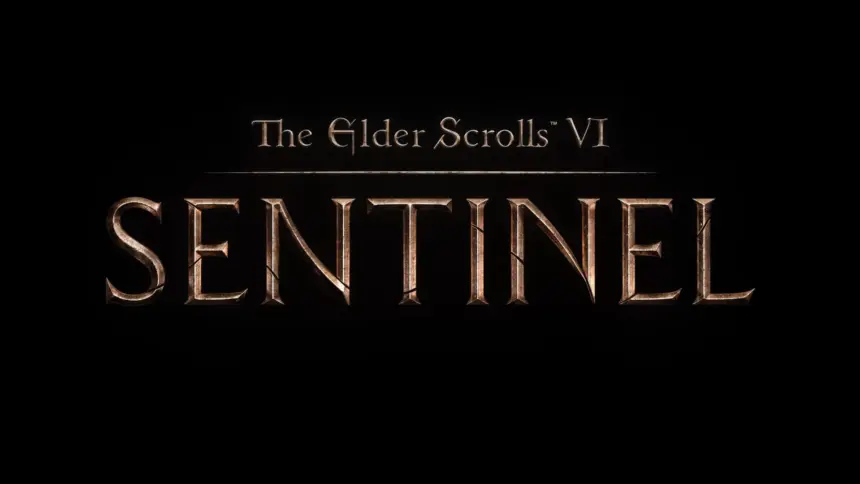
Bethesda Softworks has officially named The Elder Scrolls VI: Sentinel during a video broadcast marking the studio’s 40th anniversary on 3 November 2026. The announcement confirmed the game’s desert setting in the province of Hammerfell, ending eight years of silence following the project’s original teaser in 2018.
Key points
- Bethesda confirmed the subtitle Sentinel for the next entry in its flagship fantasy role-playing series.
- The teaser confirmed Hammerfell as the primary setting through lore attributed to Moth Priest Yazar.
- Studio leadership said development remains ongoing and that further details will not appear soon.
- Industry reports indicate the game remains more than two years away from release.
The anniversary reveal and Hammerfell setting
Todd Howard, creative director at Bethesda Game Studios, revealed the subtitle at the conclusion of a documentary video reviewing the company’s four decades in video game development. The short clip showed desert sands parting to reveal an ancient parchment scroll, followed by the appearance of the official logo bearing the subtitle Sentinel.
Alongside the video, Bethesda released an excerpt written from the perspective of an in-game historical figure. The passage reads: “The scroll offered only a shimmer, a veil thinly lifted to my eyes.” Bethesda attributed the text to Yazar, Moth Priest to High Queen Iradne of Hammerfell, dated to the year 4E 206 of Tamriel’s Fourth Era.
In established Elder Scrolls geography, Sentinel is a major coastal kingdom and capital city within Hammerfell, located in the north-western region of the continent. The setting has long featured in fan speculation because of the mountainous terrain and arid coastline shown in Bethesda’s 2018 computer-generated announcement clip.
Development timeline and release expectations
Despite revealing the subtitle and location, Bethesda showed no gameplay footage and declined to outline a launch window. In a statement posted to social media following the broadcast, the studio cautioned players that prolonged work lies ahead before the public sees in-engine systems.
“It’ll be some time before we’re ready to share more, it feels great to finally reveal the name and location with you,” Bethesda said. The update marks the first formal progression update since Bethesda completed work on its science-fiction role-playing game Starfield.
Reporting by Bloomberg reporter Jason Schreier indicates that the game remains more than two years away from store shelves. That trajectory places commercial availability around 2028 or later, which would mark a 17-year gap since the launch of The Elder Scrolls V: Skyrim in November 2011.
The protracted production cycle reflects changes across modern blockbuster software development. As game worlds grow in visual complexity, development teams require longer cycles to construct hand-crafted assets, script quest lines, and tune physics engines.

The clue from Xbox leadership
The subtitle Sentinel confirms hints dropped earlier in the year by executive leadership at Microsoft, which acquired Bethesda parent company ZeniMax Media in 2021. In August 2026, Xbox chief executive Asha Sharma referenced an internal hands-on demonstration on social media, writing that she had attended a live playthrough of a project redacted as eight asterisks.
The eight-letter placeholder prompted enthusiasts to deduce Sentinel as the most likely candidate, given its historical prominence in Tamriel lore. Sharma described the project’s technical scale and narrative design as substantial achievements for the studio’s development teams.
Bethesda spent recent years upgrading its proprietary software pipeline, moving from the original Creation Engine to Creation Engine 2 for Starfield. Technical engineers redesigned the animation architecture, illumination models, and procedural generation systems. Those systems now serve as the underlying technical foundation for Sentinel.
Console hardware and platform strategy
The distant release schedule raises practical questions about target hardware. Players currently access modern titles on mid-generation systems such as the PlayStation 5 Pro, as well as baseline machines like the PlayStation 5 Slim and Microsoft’s lower-powered Xbox Series S.
If production continues past 2028, industry analysts expect the game could arrive alongside the next cycle of home consoles, tentatively referred to by hardware trackers as Xbox Project Helix. A cross-generational release or a title built strictly for unannounced hardware would shift Bethesda’s technical ambitions, allowing programmers to avoid the memory constraints of existing boxes.
Platform availability also remains a focal point for the wider technology sector. While Bethesda published Starfield exclusively on PC and Xbox before later porting the title to PlayStation 5 in 2026, Microsoft has increasingly treated high-profile gaming software as multi-platform releases to maximise software revenue across the wider ecosystem.
For now, production continues at Bethesda’s offices in Maryland and auxiliary locations. With the official name established, the studio’s next milestone will be demonstrating how its technology engine handles the arid landscapes, dynamic weather, and swordplay of Hammerfell.