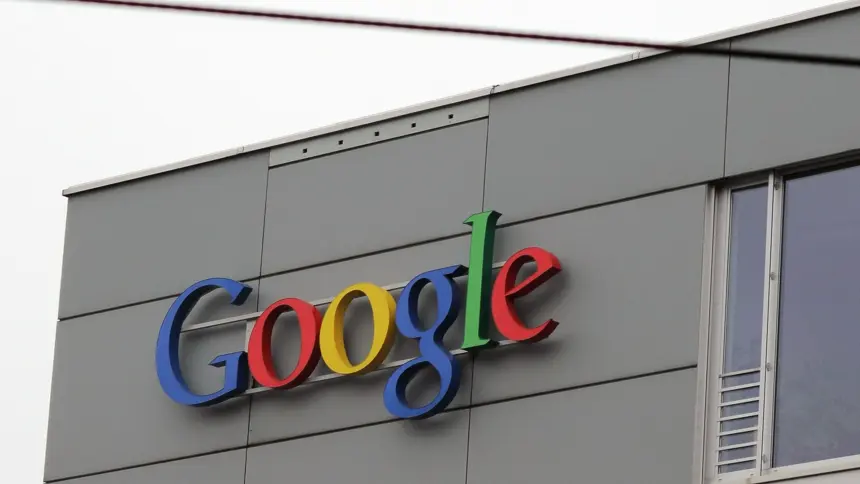
Google AI copyright rules may be breached when its Gemini chatbot reuses published news articles to answer user queries, an adviser to the Court of Justice of the European Union said on Tuesday in Luxembourg. Advocate General Maciej Szpunar delivered his legal opinion in an intellectual property dispute brought by Hungarian media publisher Like Company.
Key points
- Advocate General Maciej Szpunar said chatbot answers can infringe publishers’ reproduction rights when systems copy recognised phrasing or bypass paywalls.
- The legal opinion distinguished real-time chatbot summaries from AI training, noting that ingestion remains covered by text and data mining exemptions.
- Copyright protects the specific written expression of an article rather than underlying factual information, setting boundaries for generative search summaries.
- Judges at Europe’s top court will now deliberate, with final judgments historically following the guidance of the advocate general.
When chatbot answers breach publisher rights
The dispute centres on how Google’s large language model Gemini interacts with digital newsrooms. Like Company, an online publishing operator based in Hungary, took legal action after discovering that Google used its press content to respond directly to consumer prompts.
Publishers across Europe have reported sharp declines in referral traffic over recent years. Instead of delivering a list of clickable web links, generative search tools and standalone chatbots synthesize reporting into complete answers on the screen, removing the need for users to visit the original source.
Szpunar concluded that this mechanism creates legal liability under specific conditions. When an AI tool retrieves an online publication, reuses the material to compose an answer, and presents that text to an end user, the publisher’s neighbouring rights may face infringement.

According to the court statement, the practice crosses the legal line into an unauthorised reproduction if the system accesses content by circumventing technical barriers or paywalls. It also breaches the rules if the model reproduces “the form of expression of that publication in a recognisable manner” rather than merely relaying information.
Training versus retrieval under European law
The advocate general drew a clear legal boundary between how AI models learn and how they generate live answers. European Union copyright legislation includes explicit exceptions for text and data mining, allowing automated tools to analyse large volumes of text for research and development unless rights holders formally opt out.
Szpunar affirmed that training foundational AI models falls squarely under that framework. He stated that using protected material to train systems to understand syntax, summarise text, and generate human-like phrasing is “freely permitted under the text and data mining exception.”
The distinction separates backend data ingestion from public-facing retrieval. While model builders may scan digital archives to build language weights without paying licensing fees, deploying those models to mimic or quote proprietary articles in consumer outputs creates fresh copyright exposure.

The opinion also reaffirmed established limits on what publishers can protect. Copyright law does not grant exclusivity over mere facts, raw events, or public information reported in an article. Only the individual wording, structure, and original expression created by journalists receive legal protection.
What the case means for digital publishers
If Europe’s highest court adopts Szpunar’s position, the decision will establish a major precedent for technology companies operating across the single market. Online publishers have struggled to maintain ad revenue as generative answer engines absorb reader attention.
Forcing technology platforms to pay fees whenever their chatbots reproduce recognisable elements of news reports would create a significant financial pipeline for independent publishers. It would also force AI developers to modify retrieval systems to avoid mirroring the structure or phrasing of source material.
A binding judgment against Google could accelerate licensing discussions between tech platforms and media consortiums. Similar tensions led France and Germany to demand compensation under the EU neighbouring rights directive when search engines displayed expanded text snippets.
Chatbot summaries present a broader commercial challenge than traditional search snippets. While snippets encouraged readers to click through for the full report, AI responses frequently satisfy the query entirely, keeping the user inside the tech platform’s ecosystem.
Next steps at the European court
Opinions from the court’s advocates general are not legally binding on the Court of Justice of the European Union. However, the Luxembourg judges follow the adviser’s recommendations in roughly four out of five cases.
The judges will now begin their formal deliberations in the case between Like Company and Google, with a definitive ruling expected in the coming months. Once delivered, the judgment will guide national courts across all 27 member states in deciding copyright claims against generative tools.
As European institutions shape digital competition and consumer safeguards, such as when the EU halted national child social media bans to preserve a unified regulatory framework, the courts continue to determine how existing copyright statutes apply to automated software.
Google has not yet altered Gemini’s retrieval systems in response to the opinion. National courts will apply the final European ruling directly to pending copyright claims across the bloc.