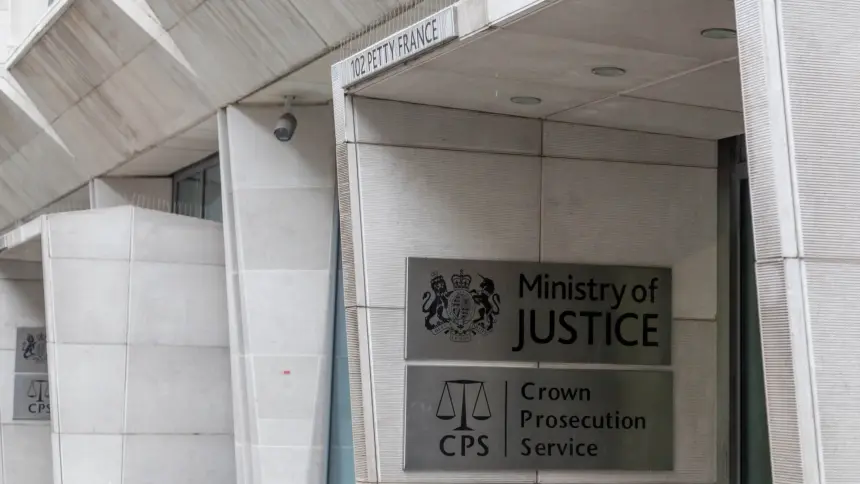
A Crown Prosecution Service prosecutor cited an imaginary legal precedent in the UK High Court after relying on an AI search tool, judicial records revealed on Tuesday. The CPS AI hallucination occurred during proceedings over whether to charge a child, marking the agency’s second known fabricated citation this year.
Key points
- A senior Crown Prosecution Service lawyer cited a non-existent Court of Appeal judgment generated by an internet search engine’s AI summary.
- Two High Court judges termed the prosecutor’s explanation unsatisfactory, though the fabricated authority did not alter the ruling to proceed with the trial.
- The incident marks the CPS’s second recorded artificial intelligence hallucination in 2026, pushing tracked UK court citations to 101 cases.
- Judges have warned that state lawyers relying on unverified synthetic outputs face potential professional sanctions and contempt hearings.
The fabricated precedent in court
The error arose during a judicial review challenging the decision by the Crown Prosecution Service to prosecute a boy who was 11 years old at the time of an alleged offence against his seven-year-old sister. Defence barristers argued that prosecutors had ignored assessments from social workers, youth offending teams and a forensic psychologist when deciding to press forward with charges.
Ravinder Dhillon, a senior crown prosecutor working within the CPS rape and serious sexual offences unit, defended the decision to take the boy to trial. In written submissions, Dhillon cited a judgment styled as CPS v R v J [2024] EWCA Crim 3529 to support the state’s legal position. No such judgment exists in the records of the Court of Appeal or any other British court.
Dhillon took the decision to proceed with the prosecution in April 2026, an approach subsequently backed by the chief crown prosecutor. In October, Dhillon informed the court that the 2024 reference was erroneous and that she had intended to cite a legitimate ruling delivered 15 years earlier. The explanation failed to satisfy the bench.

Two senior High Court judges presiding over the review described the prosecutor’s account of how the fictional ruling entered the papers as unsatisfactory in a judgment called to determine the legality of the prosecution. The court confirmed that the invented precedent did not alter its final ruling, allowing the trial in the youth court to move ahead as scheduled.
How an AI search tool misled the prosecution
The false citation came directly from an automated summary produced during an internet search. Rather than consulting closed professional databases such as LexisNexis or Westlaw, the prosecutor conducted routine internet research where commercial search features generated a composite text containing the fictitious judgment number and title.
The growth of generative answers in consumer search products has created fresh hazards for professional research. While major tech companies have rushed to embed real-time synthetic answers, industry tracking shows that models routinely invent citations, case names and statute sections when prompted on specialised topics. The market pressures driving those rollouts were visible earlier this year when volatility hit tech stocks as AI search platforms increased computing expenditure to deliver automated answers.
The CPS acknowledged the failure on Tuesday, confirming that open web browsing caused the error. A spokesperson for the prosecution service stated that the organisation discovered the blunder after staff used an open internet browser for legal preparation. Following that discovery, the CPS initiated an internal inquiry to establish how the false authority had been incorporated and to verify that no other active prosecutions relied on automated web text.

The agency maintained that it operates a strict artificial intelligence policy that bars automated systems from making prosecutorial determinations and requires direct human verification of all legal materials. Following the review, the CPS circulated guidance reminding staff that all cited authorities must originate exclusively from verified legal repositories.
Pattern of errors and judicial warnings
This episode represents the second confirmed CPS AI hallucination inside nine months. In February, an agency advocate handling the extradition of two Romanian nationals submitted non-existent legal authorities to the court, an error exposed only when opposing counsel failed to find any record of the rulings.
Following that earlier mistake, the CPS concluded that the operational risk of repeat occurrences was low. The latest disclosure contradicts that assessment, prompting sharp criticism from legal academics who study automated tooling in the justice system.
Brian Flanagan, an associate professor of law at Maynooth University who studies judicial technology, condemned the submission. “This was used as a legal source to argue for the prosecution of a child and that legal source doesn’t exist: that’s a serious failure,” Flanagan said. He pointed out that while litigants in person often make technology mistakes, state prosecutors hold coercive powers that demand absolute accuracy.
Judicial leadership has repeatedly warned the profession about the consequences of unchecked automation. In June 2025, Dame Victoria Sharp, then president of the King’s Bench Division, cautioned that synthetic errors carried “serious implications for the administration of justice and public confidence in the justice system if artificial intelligence is misused”. Sharp told practitioners that solicitors and barristers who submit fabricated material face referral to disciplinary bodies, cost orders and proceedings for contempt of court.
The wider scale of court hallucinations
The High Court submission brings the number of documented AI citation failures in British tribunals and courts to 101, according to an audit maintained by Matthew Lee, a barrister at Doughty Street Chambers. The tracker compiles verified, disputed and suspected instances where machine generation produced false authorities.
Most previous entries involved unrepresented litigants drafting submissions in employment tribunals or small claims disputes without professional software. The penetration of hallucinated material into state prosecution files points to deeper procedural vulnerabilities, particularly as busy lawyers look to accelerate drafting workflows.
Lee warned that published judgments represent only a fraction of the problem because lower court orders and routine magistrates’ hearings rarely see publication. He also highlighted data protection and confidentiality concerns, noting that pasting sensitive case elements into public web search engines risks exposing confidential prosecutorial data to commercial model developers.
Opposing barristers face expanding workloads as a result, forcing teams to audit citations simply to confirm whether opposing authorities exist. The Crown Prosecution Service said it has completed its rapid case audit and instructed all regional divisions to cease using open web searches for precedent verification.