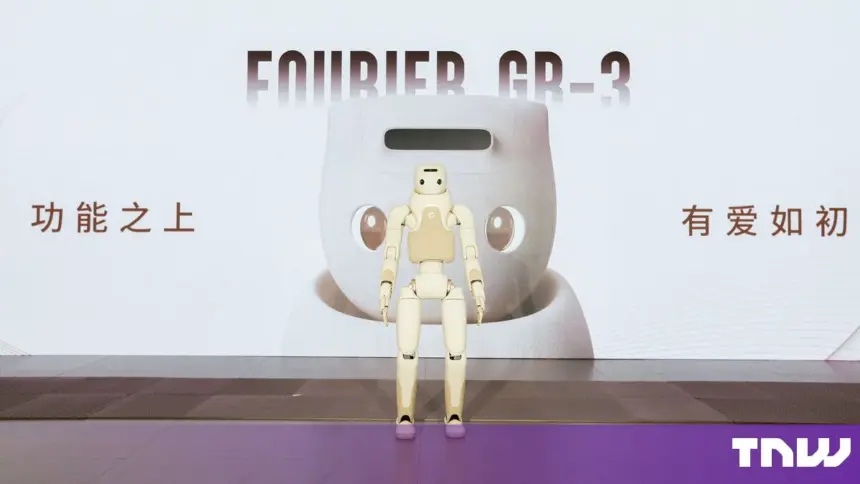
Meta has built a prototype humanoid robot named Max in collaboration with Chinese robotics firm Fourier, assembling the initial machine in roughly three months before starting work on a second edition. The company told The Information that the joint hardware project is intended strictly for internal research, with no immediate plans for commercial release.
Key points
- Meta worked with Shanghai-based Fourier to assemble Max, a 48-kilogram humanoid powered by Nvidia silicon.
- The machine gives Meta a physical testing ground for Muse, its multimodal artificial intelligence assistant.
- Engineers have already started development of Max 2, which adds upgraded limbs, sensors and a projector.
Inside the Max project
Max weighs 48 kilograms (106 pounds) and stands approximately 1.5 metres tall. Inside the chassis, the machine runs on Nvidia’s Jetson Thor computing platform, built specifically for physical artificial intelligence tasks. For human interaction, the prototype features built-in audio speakers and a facial display screen programmed to mirror human expressions. Mechanical five-fingered hands allow the machine to grasp and manipulate small objects.
Meta assembled the robot through close physical collaboration at Fourier’s facilities in Shanghai. Li-Chen Miller, Meta’s vice president of product for robotics, spent nearly two months at the Chinese manufacturer’s plant overseeing development. Meta demonstrated the finished Max unit to employees at an internal robotics summit in late August.
Work on an upgraded iteration, Max 2, started in September. The second machine will feature a revised torso, improved five-fingered hands, an integrated projection display and extra navigation sensors designed to let the machine climb and descend stairs.
Giving Muse a physical form
The robotics initiative ties directly to Meta’s broader artificial intelligence strategy. Meta views humanoid hardware as an embodied shell for Muse, its proprietary AI agent, with the eventual goal of directing autonomous assistance across household settings.
Hardware partnerships are anchoring that push. Nvidia, whose Jetson Thor hardware powers Max, reached a deal this week to invest $3bn in Meta to deepen joint technical development around Muse. The computing investment provides Meta with specialised silicon infrastructure suited for real-time robotic vision and motion planning.
The engineering group behind Max sits within Meta Superintelligence Labs. Meta bolstered that division in May by acquiring Assured Robot Intelligence, a San Diego start-up focused on AI software systems for physical machines. Personnel from Assured Robot Intelligence were absorbed into the team leading Meta’s bipedal robotics research.
The race for bipedal machines
Partnering with Fourier gives Meta access to established manufacturing lines for bipedal robotics. Fourier operates out of Shanghai and previously developed care-oriented machines. In August 2025, the company unveiled GR-3, a 165-centimetre companion robot intended to assist older adults with day-to-day living.
The joint project places Meta alongside several major technology companies pouring capital into robotic automation. Tesla has commenced assembly of its Optimus bipedal machines, targeting both factory assembly lines and consumer homes. Agility Robotics is preparing its Digit 5 humanoid using Nvidia processors, while Chinese firm Unitree is creating machine-learning models that allow robotic limbs to train and adjust their own movements.
Meta has not established a public release window or commercial pricing for any future consumer hardware based on the Max project.