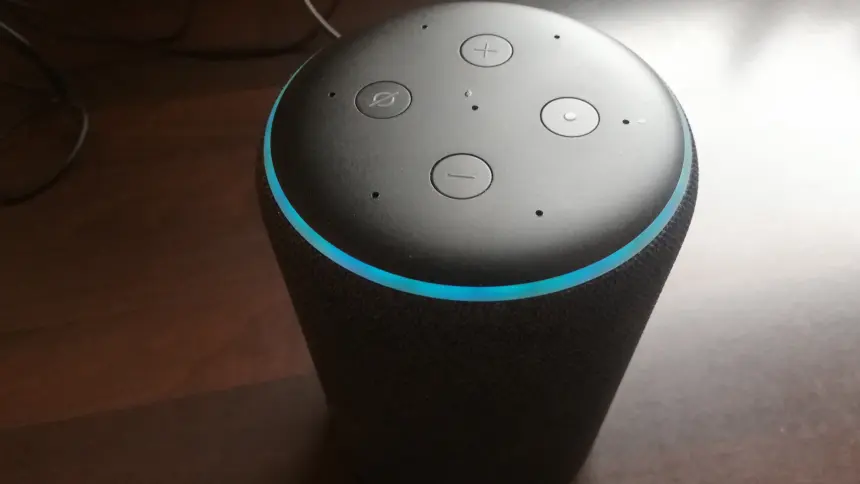
Amazon launched five updated Amazon Echo devices on Wednesday in the United States, led by a redesigned Echo Show 16 smart display with night vision. The rollout introduces upgraded hardware across speakers, displays and bedside sensors as the retail giant pushes its latest Alexa assistant deeper into consumer homes.
Key points
- Amazon introduced five smart home products in the US, ranging from a $99.99 Echo Dot to a $499.99 wall display.
- The flagship Echo Show 16 adds night vision capabilities and integrated Fire TV software.
- New camera-enabled hardware allows Alexa to recognise physical objects held in front of speakers.
- The launch follows competing October smart home announcements from Apple and pressure from emerging artificial intelligence hardware developers.
The new smart display and visual hardware
The largest model in the lineup is the redesigned Echo Show 16, which is available for pre-order at $499.99. The device features a 16-inch screen, built-in Fire TV streaming software, and Amazon’s first Echo Show camera equipped with night vision for low-light video calls and room monitoring.
Amazon also introduced a standalone Alexa Photo Frame starting at $199.99. The frame connects directly to Amazon Photos to synchronise and display digital albums automatically without requiring manual image uploads from mobile devices.
Visual sensors feature heavily across the updated range. Alongside the large wall display, Amazon added optical tracking to audio-focused hardware to give Alexa real-time visual context inside household spaces.

Audio hardware and bedside sensing
The new Echo Studio speaker is priced at $249.99 and includes a built-in camera. The optical sensor allows the Alexa voice assistant to recognise physical objects held up to the unit, while also enabling owners to check on rooms remotely through the Alexa app.
For smaller rooms, the refreshed Echo Dot costs $99.99. The miniature speaker includes a built-in smart home hub and a Wi-Fi extender for the first time, expanding mesh network coverage and local device control without requiring separate bridging hardware.
The company also introduced Echo Time, a $199.99 bedside clock. The device incorporates contactless sleep-sensing technology designed to track nocturnal movement and wake users during phases of lighter sleep, removing the requirement to wear a smartwatch or fitness tracker to bed.
Competition across ambient computing
Amazon is updating its ambient computing catalogue amid heightened competition from traditional rivals and generative artificial intelligence companies. Hardware makers are racing to connect multimodal AI assistants to domestic sensors, cameras and microphones.

Earlier this month, Apple entered the dedicated smart display market by launching HomeView, a $299 smart home terminal with a 7-inch display and facial recognition sensors. Apple also refreshed its entry-level audio lineup with the HomePod mini 2 at $149.
At the same time, venture-backed AI groups including OpenAI have signalled ambitions to develop specialised consumer hardware. Amazon’s hardware refresh relies on tighter integration between physical sensors and cloud intelligence to protect its domestic smart assistant footprint.
All five new Echo models are available to customers in the US, with retail shipments beginning over the coming weeks.