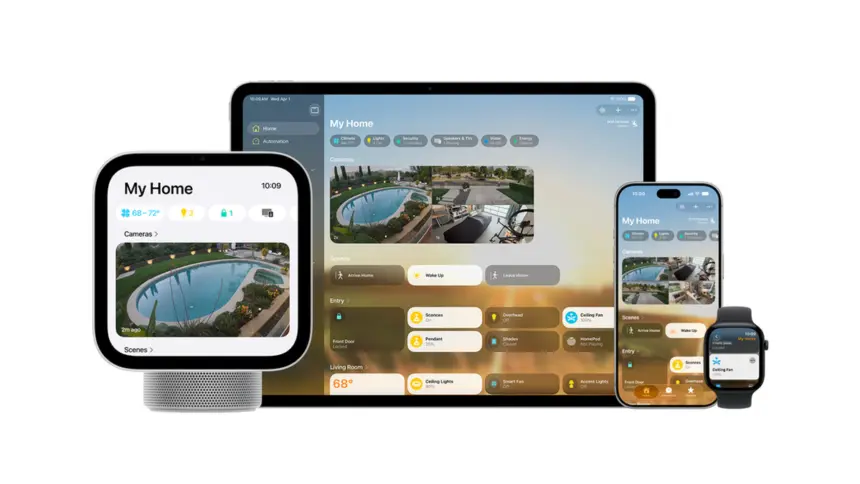
Code uncovered in Apple‘s latest smart display software reveals that the company is preparing an Apple HomeView security camera feature, allowing the bedside and countertop hub to double as a surveillance monitor for the home using HomeKit Secure Video following an unannounced firmware update.
Key points
- Firmware strings inside HomeView version 27.2 describe a dedicated security camera mode with live streaming, motion detection and recording.
- The feature integrates directly with HomeKit Secure Video and sends alerts whenever privacy or recording settings are modified.
- Visual indicator lights and audible alerts will warn household members whenever someone tunes into the live feed or recording begins.
- Apple unveiled the HomeView hub in October alongside third-party smart accessories but has not yet announced camera surveillance functions for the device.
What the HomeView code reveals
The references were discovered inside HomeView firmware version 27.2 by independent software researcher pdfu, who shared the strings online. The code describes a setup walkthrough that directly states: “Your HomeView can be used as a security camera with HomeKit Secure Video.”
According to the code strings, the software allows the hardware’s built-in front-facing camera to stream live video, monitor rooms for activity, and save encrypted video clips to iCloud. Feed access is limited exclusively to recognised members of the Apple Home ecosystem.
To prevent covert surveillance inside living spaces, the operating system includes strict privacy safeguards. An indicator light will illuminate on the display whenever the lens is active. The device will also play an audible chime when an approved user opens the live video feed or when the camera triggers a recording.

The system is also configured to notify all members of the household whenever any user alters the security camera preferences, ensuring that recording modes cannot be enabled or disabled in secret.
How HomeKit Secure Video integration works
HomeKit Secure Video is Apple’s existing end-to-end encrypted video platform for home monitoring. Rather than processing motion and footage on external cloud servers, the architecture relies on an on-premises home hub, such as an Apple TV or HomePod, to analyse scenes locally before uploading encrypted footage to iCloud storage.
The strings found in the HomeView 27.2 build suggest the smart display will support context-specific profiles. Users will be able to customise streaming and recording triggers depending on three primary states: home, away, and asleep.
For instance, a household could set the HomeView camera to shut off completely while occupants are present, switch to motion detection when everyone leaves, or track movement in shared hallways while residents sleep.

Why Apple delayed the surveillance mode
Apple officially launched the HomeView smart display at a dedicated smart home hardware event in October. The presentation positioned the device as a central control interface for lighting, media, intercom communications, and FaceTime calls.
During that launch, Apple showcased third-party security monitoring hardware, including the LG Video Doorbell alongside separate LG cameras and sensors. The company did not mention whether the HomeView’s own optical sensor could serve as a standalone security device.
Indoor cameras present significant privacy risks, especially when placed in bedrooms, kitchens and private living areas. Competing smart display makers, including Amazon with its Echo Show and Google with the Nest Hub Max, have faced persistent user scrutiny over microphone and camera placement.
Amazon has long supported an indoor monitoring tool through its Guard feature on Echo displays, letting owners view remote feeds and detect sounds. Google also permitted Nest Hub Max owners to enrol the device’s front lens as a Nest Cam, though it faced criticism when indicator lights failed to reassure users.
By building explicit audio cues, visible display signals, and multi-user notifications into HomeView’s firmware, Apple appears to be addressing those privacy objections before exposing the tool to consumers.
What happens next
Apple has not issued an official timeline for enabling HomeKit Secure Video support on the HomeView. The discovery of fully formed interface text and setup pages inside version 27.2 indicates that the feature is undergoing internal testing and could arrive in a forthcoming system update.