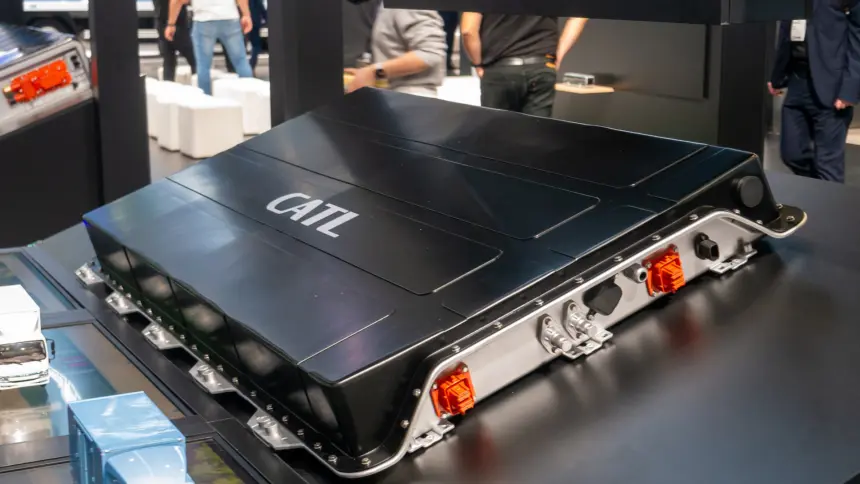
Chinese battery manufacturer CATL has unveiled a dual-electric range extension battery system designed for commercial vehicles, seeking to lower running costs and extend vehicle range. The company revealed the CATL truck battery architecture alongside commercial agreements covering 13,000 units for battery-swapping heavy haulage fleets.
Key points
- CATL unveiled a dual-electric range extension battery system built specifically for heavy-duty electric trucks.
- Customers signed agreements for 13,000 battery units at the unveiling event.
- The technology pairs range extension capabilities with battery-swapping operations to improve vehicle utility and operating economics.
Commercial orders at launch
CATL announced the system as a practical way to address the cost and operational constraints that slow the electrification of heavy goods vehicles. Fleet operators signed commitments for 13,000 units at the unveiling ceremony, signalling immediate commercial interest in alternative power configurations for heavy transport.
Heavy-duty electric haulage remains one of the most difficult transport sectors to decarbonise because of high payload demands and long duty cycles. Fixed charging stops can cut into operating hours, while large battery packs add significant weight that reduces maximum cargo capacity. CATL designed the new system to counter those trade-offs by pairing a core pack with supplemental range extension.
How the dual-electric architecture works
The company described the system as a dual-electric range extension format. In heavy commercial vehicle engineering, range-extended systems typically provide additional electric power reserves or split battery roles between primary propulsion and reserve endurance.
By splitting power storage across a dual configuration, commercial operators can manage state-of-charge demands more effectively across long routes. The design aims to make electric lorries more economical to purchase and run, addressing fuel costs without burdening the vehicle chassis with an oversized single battery pack. CATL has not yet published detailed cell chemistry specifications or weight figures for the production units.
Battery swapping in heavy haulage
The dual-electric system is built to work in battery-swapping heavy trucks. Battery swapping allows an electric lorry to pull into an automated bay, deposit a depleted power pack, and install a fully charged replacement in a matter of minutes. This eliminates prolonged charging stops during tight freight schedules.
Integrating range extension into swapping fleets provides logistics companies with operational flexibility. Drivers can run on primary pack energy while relying on supplemental capacity during periods when swapping bays are spaced further apart on regional motorways.
The push to electrify freight coincides with broader changes across the commercial vehicle sector. As operators evaluate electric options, automated assistance and sensor packages are also expanding, with manufacturers such as Daimler testing active safety systems for heavy trucks to protect drivers and road users over long hauls.
What happens next
CATL has not announced formal delivery dates or named the individual commercial partners responsible for the 13,000 unit order. The company will need to scale production and confirm which lorry manufacturers will integrate the dual-electric swapping system into commercial production lines.