Elon Musk’s artificial intelligence venture, xAI, is offering to purchase hundreds of homes in Southaven, Mississippi, on the condition that owners agree not to sue the company over relentless xAI data centre noise and vibrations generated by an unpermitted cluster of gas turbines powering its nearby facilities.
Key points
- Subsidiary MZX has approached homeowners across Southaven with buyout offers requiring signed releases from an ongoing federal nuisance lawsuit.
- Real estate agents are targeting 418 houses in the Colonial Hills subdivision, where at least five sales have closed and 18 owners have agreed terms.
- The facility relies on dozens of temporary gas turbines that lack federal clean air permits, generating persistent low-frequency sound.
- Legal challenges from local homeowners and civil rights groups continue to mount as local officials weigh moratoriums on rapid data centre expansion.
Buyout contracts demand legal waivers
Brokers representing MZX, an operating subsidiary of xAI, have begun visiting properties across the Colonial Hills neighbourhood on the western edge of Southaven. According to audio recordings and written letters distributed to residents, the company has set a target of acquiring 418 properties. The documentation explicitly conditions the property sales on homeowners waiving any right to pursue legal action against the company.
A formal letter delivered to households by MZX outlines the transaction terms directly. The company wrote that it requires real estate for operational needs and is willing to buy Southaven properties in exchange for a complete release of legal claims relating to the facility. Homeowners who accept the purchase terms must execute a separate agreement releasing MZX from any damages or liabilities connected to pending noise litigation.
County property filings show that MZX has already completed purchases on at least five residential properties since early October 2026. Real estate agents told residents that roughly 18 households have agreed to sell so far. The average house price across the subdivision stands at approximately $180,000, making a full neighbourhood buyout a manageable expense for an enterprise investing tens of billions into high-density computing clusters.

The buyouts also affect local tenants who do not own the properties they occupy. Renters in Colonial Hills have reported receiving two-month notices to vacate after landlords accepted buyout proposals from the company, displacing families who have lived near the industrial border for years.
The battle over turbine roar
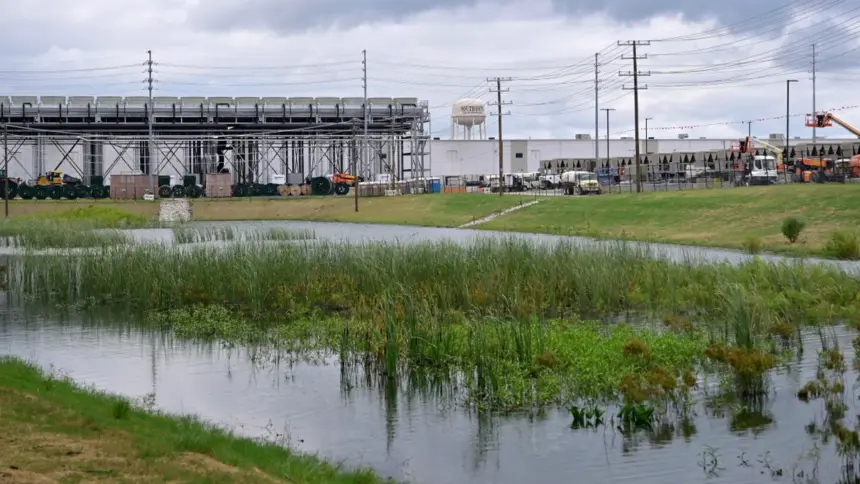
The buyout campaign stems directly from community fury over the acoustic footprint of xAI’s power installation. In the summer of 2025, the company took over a former Duke Energy site in Southaven and installed 69 portable, truck-mounted gas turbines to supply electricity to its computing hardware. The turbines run continuously, emitting low-frequency rumblings and shrill hums that travel miles into surrounding residential areas.
Residents report that the sound resembles a commercial jet idling on a runway without interruption. Homeowners have described sleep deprivation, vibrating windowpanes, and anxiety caused by the unceasing hum. While local municipal sound ordinances enforce a daytime limit of 70 decibels, acoustic specialists note that sustained low-frequency sound between 50 and 60 decibels can cause severe health disruptions when experienced inside homes during sleeping hours.
In June 2026, three residents turned to the courts after local administrative complaints brought no relief. In court filings in the nuisance lawsuit, lead plaintiff Jason Haley accused the company of causing severe nuisance, structural vibrations, and continuous noise harms. Haley, who lives half a mile from the power site, documented sound levels on video after local officials failed to intervene.

Company representatives have denied all accusations in court and insisted that the business aims to be a considerate neighbour. To blunt the acoustic impact, xAI built sound-dampening perimeter barriers and adjusted turbine operating schedules. However, nearby residents argue that sound barriers do little to muffle the low-frequency vibrations that travel through the ground and penetrate standard drywall.
Unpermitted power and environmental clashes
The controversy surrounding the Southaven plant extends beyond acoustic disturbance. The US Environmental Protection Agency determined earlier this year that the 69 portable turbines have operated without required federal Clean Air Act permits. While the federal agency confirmed the violations, it left enforcement authority to Mississippi state environmental regulators.
Public health advocates have raised alarms regarding airborne combustion byproducts produced by running dozens of methane-fired turbines in dense suburban corridors. A regional impact study by the Southern Environmental Law Center calculated that unmonitored toxic emissions from the turbine array could generate $44 million in annual healthcare burdens across the greater Memphis metropolitan area.
In April 2026, environmental organisations and the National Association for the Advancement of Colored People filed a federal lawsuit to halt turbine operations immediately. Government lawyers attempted to have the action dismissed by arguing the artificial intelligence infrastructure was vital to national security operations, but a federal judge rejected that motion earlier this month, allowing the environmental case to proceed.
The company reached a settlement with Mississippi environmental regulators in July 2026, pledging to decommission the temporary mobile turbines by the summer of 2027 in favour of a permanent, regulated natural gas generating station. The agreement has failed to calm resident anger, as the company faces potential state fines of up to $6.1 million for clean air and storm water infractions, alongside contractor liens claiming over $220 million in unpaid building invoices.
The wider rush for computing power
The aggressive timeline in Mississippi reflects the intense pressure across the artificial intelligence sector to secure dedicated electrical generation. As leading developers build clusters requiring hundreds of megawatts to train frontier neural networks, public utility grids in many states cannot supply power quickly enough. Technology companies are increasingly deploying private generating hardware directly adjacent to server halls.
Musk’s firm has concentrated massive resources along the Mississippi-Tennessee state line. Over the past 24 months, the venture has built three vast processing facilities: Colossus I and Colossus II in Memphis, paired with the Macrohardrr facility in Southaven. Musk has stated during investor calls that compute capacity is the primary constraint holding back the development and conversational performance of the Grok model family.
Southaven Mayor Darren Musselwhite has defended the tech group’s presence, arguing that the industrial campus will generate substantial property tax revenue for DeSoto County and fund civic facilities, including an emergency services training centre. Musselwhite stated that the home buyout programme serves to house incoming engineering personnel while offering an exit route for neighbours unhappy with nearby industrial development.
Elected officials across the state border in Memphis voted down a permanent one-year moratorium on AI data centres last week, opting instead for a temporary 135-day pause to review grid stability and environmental standards. Back in Southaven, homeowners must now decide whether to accept cash buyouts and leave their properties or continue contesting the roar of high-density AI infrastructure in federal court.