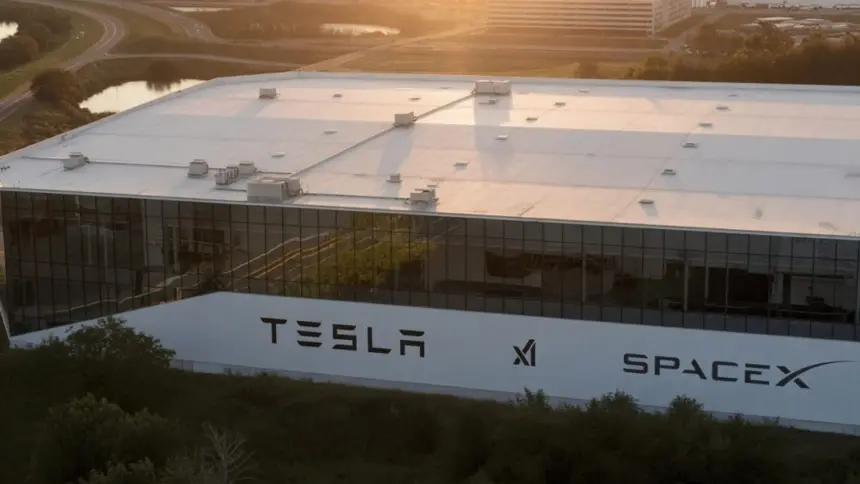
A proposed SpaceX supercomputer campus in southern Arizona will cost approximately $50 billion as part of an expanding AI supercomputing drive, the company announced on Thursday. The development in Cochise County would house up to nine data halls drawing six gigawatts of electricity, anchoring an infrastructure push alongside a companion project at Starbase in south Texas.
Where is the Cochise County campus planned?
SpaceX put a price tag on the southern Arizona site after withholding its financial scope during early planning filings, Teslarati reported. The company’s involvement only became public on 4 November, when its representatives hosted a crowded town hall meeting at Cochise Elementary School. Until then, local planning documents had been lodged under the entity name Tombstone Resources LLC.
A company representative told residents at the meeting that the application used an alternate name because putting SpaceX on public documents “draws attention” from outside the county, local television station KVOA reported.
The zoning application details a 747-acre plot near the Willcox Playa, roughly 80 miles east of Tucson. Plans submitted for the site propose building up to nine separate data halls, each covering approximately 493,000 square feet.
Power and water demands
SpaceX plans to activate the Arizona campus across four stages of roughly 1.5 gigawatts each. Reaching six gigawatts at full build, the complex would be supported by a 24 gigawatt-hour battery storage system and approximately $3.6 billion in transmission grid upgrades.
That scale of energy consumption would exceed the electrical draw of all operating data centres in Maricopa County combined by roughly 2.5 times, according to an Arizona Republic analysis.
Securing that volume of electricity represents the central technical hurdle for the project. The 747-acre parcel sits next to the Apache Generating Station, a facility powered by coal and natural gas with about one gigawatt of current capacity. The plant was scheduled to retire by 2028, but SpaceX told residents that private capital could expand the station beyond six gigawatts.
Water management is another pressing consideration in the arid desert basin. SpaceX stated in its application that the facilities will use dry cooling systems, avoiding any industrial extraction of local groundwater. The company projects annual water demand of seven to 10 acre-feet for ongoing operations, roughly matching the yearly consumption of 20 to 30 households.
To build local support, the company highlighted substantial economic incentives for the rural area. SpaceX claims construction will create approximately 5,500 jobs, followed by 1,000 permanent operational posts, and said the investment could reduce electricity bills for members of local electric cooperatives by up to 20 per cent.
Why are local residents opposing the project?
Despite the promised utility savings and jobs, community resistance has mobilised quickly. A petition calling on Cochise County officials to reject the zoning permit has gathered approximately 2,400 signatures.
Environmental concerns focus on the neighbouring Willcox Playa, a dry lake bed that serves as a winter roosting and landing area for federally protected sandhill cranes. SpaceX told residents during the town hall that its facility design accounts for the birds.
A $74 billion infrastructure drive
The Arizona project forms part of an aggressive multi-state expansion into AI supercomputing. Combined with a planned $24 billion gas-fired power plant and data facility at Starbase in south Texas, SpaceX is preparing more than $74 billion in AI supercomputing campuses across both states, Quartz reported.
SpaceX said on Thursday that early works at the Starbase site have already generated more than 3,000 construction jobs. The business has also pledged $220 million towards municipal water and wastewater networks in nearby Brownsville, with $40 million of that total already disbursed.
Both planned campuses will expand an AI infrastructure base currently concentrated around Memphis, Tennessee. There, SpaceX operates its Colossus data centres primarily with natural gas turbines, and earlier this year secured a regulatory permit to build an electricity generating station across the state border in Southaven, Mississippi.
At the close of the third quarter, SpaceX reported 1.7 gigawatts of total nameplate compute capacity. If completed to its full six-gigawatt design, the Arizona installation on its own would provide more than triple the compute capacity the company currently runs.
Regulatory hearings in December
Key municipal decisions on both the Arizona and Texas facilities are scheduled for the same day.
The Cochise County Planning and Zoning Commission has scheduled a public hearing on the Tombstone Resources application for 9 December in Bisbee, following a deadline for written comments on 27 November. If local planners approve the permit, SpaceX expects site construction to begin in March 2027.
In Texas, the Starbase City Commission will convene on 9 December to consider a property tax abatement for the $24 billion gas plant and supercomputing facility.