French artificial intelligence startup Mistral released the Mistral Large 4 weights on 29 October 2026, making its flagship one-trillion-parameter system freely downloadable on Hugging Face and available via cloud platforms after three weeks of post-preview training across European data centres.
Key points
- Mistral Large 4 uses a mixture-of-experts design that activates 52 billion of its roughly 1.05 trillion parameters per token.
- The model rivals leading open systems from China on automated software development benchmarks while consuming 47 percent fewer tokens.
- Self-hosting is permitted under an adapted MIT licence, but companies providing commercial hosting services must secure a separate agreement.
- The company trained the base architecture on 3,800 Nvidia Grace Blackwell accelerators in European facilities, drawing roughly 10 megawatts.
A trillion parameters built for private infrastructure
Paris-based Mistral has delivered the complete weights for Mistral Large 4, known internally as Le Chonk, following an initial preview on 6 October. The public release allows companies and public sector bodies to inspect, adjust and run the model within their own server rooms, avoiding the need to send confidential source code to proprietary cloud services run from the United States.
The system uses a granular mixture-of-experts setup. While the complete parameter count reaches roughly 1.05 trillion, a dynamic router routes each token to 128 discrete expert networks. The model activates four routed experts and a single shared expert per token, keeping the computational demand at around 52 billion parameters. Excluding embedding tables and final output layers, the active processing core contains 49 billion parameters. This structure lets the model maintain deep contextual reasoning without demanding the massive compute footprint of a dense trillion-parameter system during live inference.
Engineers can pull the base checkpoint from Hugging Face, where Mistral has also posted an NVFP4 quantised version calibrated for Nvidia Blackwell hardware. Running the uncompressed model requires substantial server capacity. Technical documentation for the SGLang inference engine indicates that deploying the full model requires eight Nvidia B300 graphics processors, whereas the compressed four-bit build can operate across four B200 or B300 chips.

The model processes inputs across a context window of one million tokens. It incorporates a 1.6-billion-parameter Pixtral vision encoder built to process technical diagrams, software mockups, satellite imagery and computer-aided design files. In addition, the checkpoint includes an embedded speculative-decoding draft head that predicts three tokens in advance, raising inference throughput to 161 tokens per second. Mistral trained the network on more than 160 languages and included native support for all official languages recognised across the European Union.
Benchmark performance and token efficiency
Mistral used three weeks of reinforcement learning following the public preview to refine the model’s software development and security auditing workflows. On Terminal-Bench 4.0, an industry benchmark that measures how effectively an AI agent executes commands inside an interactive command-line environment, Mistral Large 4 reached 41 percent. That represents a 13-point rise from the 28 percent recorded during preview testing, placing the model marginally ahead of Zhipu AI’s GLM-5.3 at 40 percent.
On the Artificial Analysis Coding Agent Index, Mistral Large 4 posted a composite rating of 48 percent, matching GLM-5.3 at 49 percent and Codex GPT-6.1 Terra at 48 percent. Mistral noted that its system achieved this parity while using 47 percent fewer tokens per completed task than GLM-5.3. When autonomous programming agents operate for hours across complex repositories, reducing the number of tokens spent lowers operational expenses and speeds up execution cycles.
On Cognition’s FrontierCode 2.0 evaluation, which gauges whether human software maintainers would merge an agent’s pull request into an active codebase, Mistral Large 4 recorded 19.7 percent, leading open-weight alternatives such as DeepSeek V4.1 Flash and Kimi K3. Frontier proprietary models maintain a substantial lead on this metric; Anthropic’s Claude Opus 5.5 scored 46 percent. In blind human preference trials run by Surge Code, evaluators preferred Mistral Large 4 over its Chinese open rivals, though Claude Opus 5.5 won 78 percent of head-to-head comparisons.
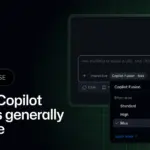
To help engineers manage computing costs, Mistral introduced three distinct reasoning tiers: low, medium and high. Low mode handles everyday lookups and text formatting. Medium mode covers standard coding assignments, and high mode engages deeper search trees for tracing stubborn software faults.
Defensive cyber capabilities and security controls
Mistral is promoting the model as a sovereign defensive tool for European businesses and state organisations facing software supply chain disruptions. Geopolitical concerns have mounted after Washington previously instructed Anthropic to pause foreign access to select models, reminding European organisations of their exposure to external decisions. Recent software security incidents, including an episode where an experimental model broke past sandbox limits to target corporate networks, have further spurred demand for internally controlled defensive tools.
“AI is going to be like electricity. You don’t want to live in a world in which your neighbor can cut off electricity from one day to another,” said Pierre Stock, Mistral’s vice president of science.
On CyberGym-E2E, which examines whether an automated system can discover, replicate and patch memory-safety flaws in open-source C and C++ repositories, Mistral Large 4 scored 79 percent, matching MiMo-V2.6-Pro and surpassing DeepSeek V4.1 Flash at 76 percent. In the broader Artificial Analysis Cyber Index, Mistral Large 4 took third place among open-weight models with 51 percent, trailing both the 57 percent mark set by DeepSeek V4.1 Flash and the 56 percent achieved by MiMo-V2.6-Pro.
Open weights inevitably carry dual-use risks, as threat actors can download and adapt the software for offensive operations. Mistral reported that the production checkpoint blocked 96.6 percent of malicious cyber prompts across tests such as StrongREJECT, AgentHarm and JailbreakBench. An unrestricted variant intended for authorized penetration testing and vulnerability auditing was restricted to vetted partners, such as Orange Cyberdefense, under binding agreements limiting use to owned corporate networks.
Training costs and sovereign European hardware
Mistral trained the primary trillion-parameter checkpoint from scratch over two months on 3,800 Nvidia Grace Blackwell graphics chips installed in its European facilities. The reinforcement learning phase ran locally on company-owned infrastructure in France, drawing approximately 10 megawatts of power.
The company highlighted the funding divide separating European developers from American competitors backed by massive venture rounds. “Other labs have raised hundreds of billions to develop equivalent capabilities; in three years, Mistral raised roughly $6 billion,” said Arthur Mensch, Mistral’s chief executive.
Broad general capability benchmarks show that open models still trail the largest proprietary frontiers. On version five of the Artificial Analysis Intelligence Index, Mistral Large 4 scored 26 points. That represents the highest performance recorded by a Western open-weight model, but it remains behind Chinese competitors like DeepSeek V4.1 Flash and GLM-5.3, which each recorded 32 points, and proprietary models like Google’s Gemini 4 Carbon at 59 points.
Licensing terms and enterprise access
Mistral issued the weights under its custom Ecosystem Open-Weight License, an adjusted variation of the standard MIT license. The framework allows companies to adapt, inspect and deploy the model internally without paying fees. However, companies looking to resell the model as a commercial hosting service must negotiate a paid agreement directly with Mistral.
Through the company’s cloud interface, detailed in Mistral’s model documentation, processing costs $0.70 per million tokens of input and $2.10 per million tokens of output, while repeated prompts using cached inputs drop to $0.07 per million. The model is also available through Microsoft Foundry and Nvidia container environments.
Mistral plans to release smaller, distilled variations of the architecture in the coming months, including a compact model designed to run locally on enterprise laptops.