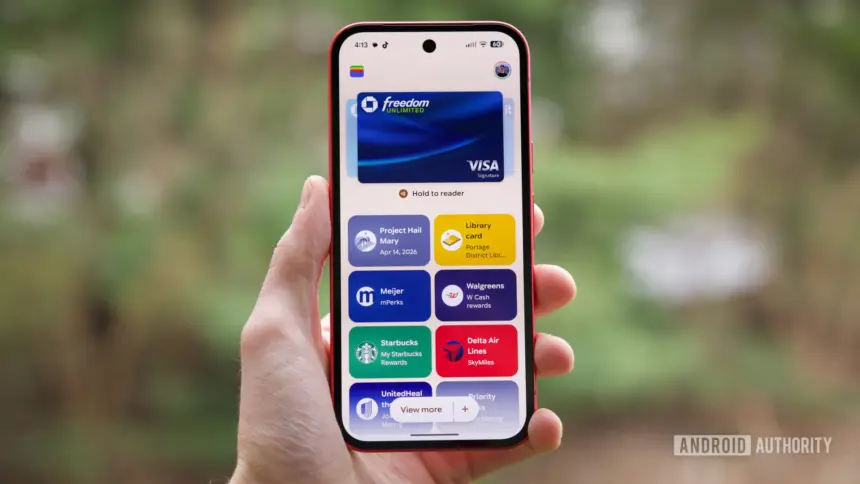
Google launched a Google Wallet Gemini integration on 13 November 2026, giving US users the ability to connect their spending records and bank accounts to the AI chatbot on Android, iOS, and the web to analyse transactions, track subscription costs, and build household budgets.
The update connects Google Wallet directly to Gemini’s Personal Intelligence system, as detailed in Google’s product announcement. Users activate the tool by typing @Google Wallet in a chat prompt.
Users can query their standard Google Wallet transactions or link external bank accounts and credit cards through third-party fintech provider Plaid. Android Authority, which first reported early testing of the feature in September, reported that the rollout is now live across mobile and desktop interfaces in the United States.
How the Wallet connection works
Once connected, Gemini answers conversational questions about spending history. A user can ask the bot to review their spending from the past quarter, or request advice on saving $1,000 across three months.
According to 9to5Google, the model can generate dynamic in-chat charts showing cash flow, asset allocation, and budgets. It can also examine past transactions to propose holiday budgets based on what a person spent on gifts and travel the previous year.
Subscription tracking is another central capability. Users can instruct Gemini to scan linked accounts for recurring charges and highlight any services that raised their prices during the year.

The connection is read-only. As Engadget reported, Gemini cannot move funds or make purchases on behalf of users, keeping it distinct from automated shopping agents. Google confirmed the model cannot “move, manage, or invest your money”.
That read-only setup differs from Google’s Universal Cart system, which already allows Gemini to process payments, The Next Web reported.
Data handling and AI training rules
Financial data connections are managed through the Gemini connectors menu, where users can turn the integration on or off at any time. Google’s Connected Apps documentation warns users not to rely on Gemini for financial advice and recommends consulting a professional.
Shared information includes saved payment methods, records from Google services stored in Wallet, and linked external accounts. Any new information added to connected accounts in the future also becomes visible to the chatbot.
The company says it does not train its generative models directly on raw Google Wallet transaction logs. However, if users keep their Gemini Apps Activity setting enabled, Google may train models on summaries, transaction inferences, prompts, and suggestions generated during those financial chats, Unite.AI reported.
Human reviewers, including external service providers, inspect a small subset of chats for safety and debugging. Google says it removes account identifiers and strips personal details from records before contractors see them, unless it is investigating abuse or harm.
Disconnecting Wallet does not delete past chat history. Users who wish to clear their financial prompts must delete their Gemini Apps Activity records separately to prevent future model training on those summaries.
Memory Summary and account restrictions
Alongside the financial connector, Google introduced Memory Summary, a settings panel that displays what Gemini has retained about a user’s goals and preferences. Users can inspect a chronological log, edit entries, and erase details they no longer want stored.
The tools carry separate eligibility rules. Personal Intelligence connections, including Google Wallet, require a personal Google account and are unavailable to Workspace business, enterprise, or education users. Memory Summary requires users to be at least 18 years old, with both Keep Activity and Memory turned on.
Geographical limits also apply: while Wallet features are rolling out across the US, Memory Summary is unavailable in the United Kingdom, the European Economic Area, Switzerland, and Nigeria.
The Wallet rollout builds on Google’s expanded Personal Intelligence system, which launched in March 2026 across Search, Chrome, and the Gemini app to draw context from Gmail, Photos, and YouTube.
Chatbots move into personal finance
The update puts Google in direct competition with rival AI developers that have added banking tools to their chatbots this year. Anthropic introduced a read-only Claude personal finance feature a week earlier, while OpenAI began letting select ChatGPT users link bank accounts in May.
Unlike autonomous shopping agents such as Meta Muse or OpenAI’s Dots tools, which can buy items and have prompted bans from Amazon, Delta, and United Airlines, consumer banking tools remain restricted to analysis.
Google has not announced when the Google Wallet connector will expand beyond US users.