Westlake University has launched a specialised world model research centre at its Yungu Campus, directing its resources towards the development of physical intelligence. The new research institute began operations on 31 October, with Yu Kaicheng named as director and Jin Yaochu appointed as the centre’s chief scientist.
Key points
- Westlake University opened the new facility at its Yungu Campus on 31 October.
- Yu Kaicheng serves as director of the institute, with Jin Yaochu acting as chief scientist.
- The centre is dedicated to research into physical intelligence through world models.
Leadership and structure at Yungu Campus
The establishment of the centre brings together specialist researchers at Westlake University’s Yungu Campus. Yu Kaicheng takes charge of direct operations and strategic research programmes, while Jin Yaochu steers the scientific agenda as chief scientist, Pandaily reported.
By placing the centre on its primary Yungu site, the university provides the initiative with dedicated laboratory infrastructure. The team has been tasked with exploring how artificial intelligence can understand physical environments rather than relying purely on text-based patterns.
The shift toward physical intelligence
The mandate of the new centre reflects a broader movement within artificial intelligence research. While large language models process text tokens, systems designed for physical intelligence must understand geometry, gravity, time, and spatial interaction.
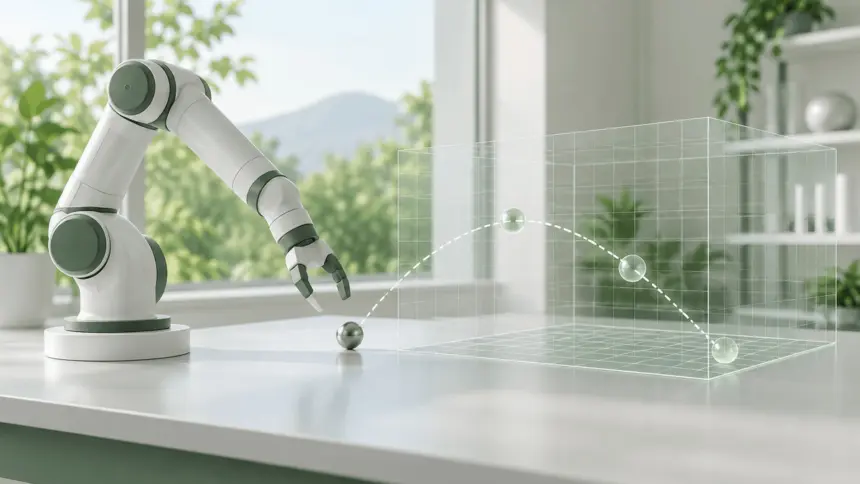
World models attempt to replicate how environments operate. Instead of predicting the next word in a sentence, these architectures simulate how physical objects respond to forces, movement, and human intervention. Teaching machines internal representations of the real world is widely viewed as a necessary precursor to reliable autonomous systems, spatial computing, and robotics.
What world models mean for robotics
Building reliable representations of physical environments remains a persistent challenge in automated systems. Traditional robotics pipelines often fail when confronted with unstructured spaces or unpredictable real-world dynamics.
World models address this limitation by allowing machines to forecast outcomes before taking physical action. An automated system equipped with such a model can simulate different movement paths internally, evaluating risks and mechanical consequences in software before executing them in hardware.
Westlake University has not yet published specific project timelines or hardware deployment schedules for the new facility. Work at the Yungu Campus centre is expected to focus on basic architecture and foundational training methods for physical intelligence.