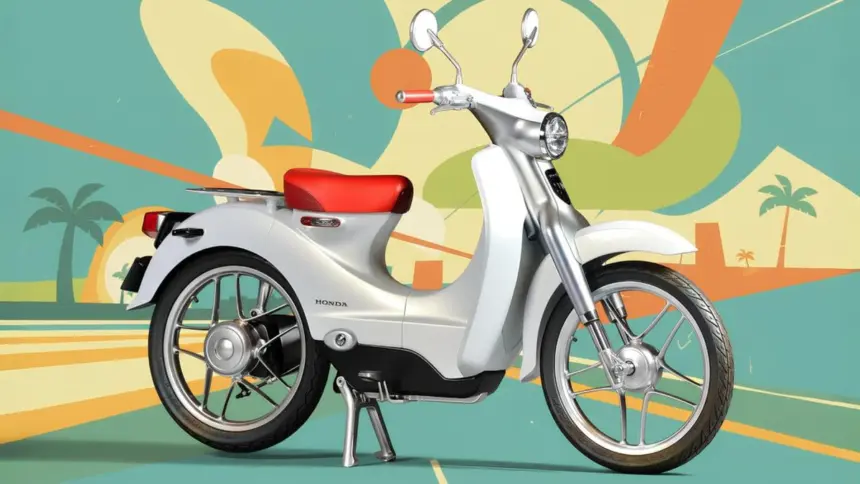
Surging sales of electric motorcycles and scooters in Vietnam have begun eroding Honda‘s decades-long dominance in Southeast Asia, according to market data released in late October 2026. Domestic manufacturer VinFast drove the shift as electric two-wheelers captured nearly a third of all new motorcycle purchases across the country during the first nine months of the year.
Key points
- Electric two-wheelers reached 973,247 unit sales in Vietnam between January and September 2026, up 90.5% year on year.
- Battery-powered models now account for roughly 32% of all new two-wheeler registrations nationwide.
- Vietnamese manufacturer VinFast jumped into second place overall with a 152.1% sales surge, while Chinese brand Yadea took fourth place.
- Honda retained its position as the country’s top seller, but an 8.4% growth rate saw its overall market share decline.
The numbers behind the electric surge
Two-wheeler registrations across Vietnam climbed by 25.9% year on year to exceed 3 million units between January and September 2026. National sales figures show that consumer appetite shifted heavily towards battery systems rather than traditional combustion engines during that window.
Deliveries of battery-powered models expanded by 90.5% to hit 973,247 units. That volume carried electric motorcycles and scooters to roughly 32% of total two-wheeler demand in the country, marking one of the fastest fleet transitions recorded in a major regional market.
Local firm VinFast took the largest share of those electric gains. The company recorded a 152.1% jump in deliveries, overtaking Japan’s Yamaha to secure second place overall in the national sales table behind Honda. Electric specialist Yadea also capitalised on the demand, finishing the nine-month period in fourth position.

Shifting dynamics in a petrol stronghold
Japanese firms have relied on petrol-powered bikes to dominate Southeast Asian commuting for decades. Honda remains Vietnam’s largest supplier and expanded its unit volume by 8.4% through September. However, because the total market expanded at triple that speed, Honda’s overall grip on buyer share weakened as customers moved to battery alternatives.
The upper ranks of Vietnam’s market now reflect an even split between combustion stalwarts and pure electric contenders. VinFast and Yadea have expanded their catalogues with practical commuter models priced directly against petrol equivalents, helping turn zero-emission bikes into mainstream purchases rather than niche transport.
City clean-air policies have accelerated the changeover. Local authorities have introduced measures to tackle urban exhaust emissions, including schemes designed to restrict petrol-powered motorbikes within sections of Hanoi. Those initiatives have encouraged daily commuters to switch to electric runabouts ahead of regulatory deadlines.
What the shift means for legacy brands
Vietnam ranks among the world’s most lucrative two-wheeler economies, providing crucial volume for legacy Japanese vehicle builders. The rapid traction established by electric competitors shows that riders will readily leave petrol behind once battery models deliver dependable range, accessible pricing, and local charging support.
Honda has committed to electrifying its global motorcycle catalogue over the coming decade, yet its current showroom volume in Southeast Asia still depends heavily on petrol engines. The contrast between Honda’s single-digit growth and the electric sector’s 90.5% jump illustrates how quickly regional dynamics can pivot when domestic manufacturers scale local battery production.
With manufacturing lines running at full pace, VinFast and rival electric producers enter the final quarter of 2026 holding substantial momentum, leaving established petrol manufacturers with little time to defend their regional market share.