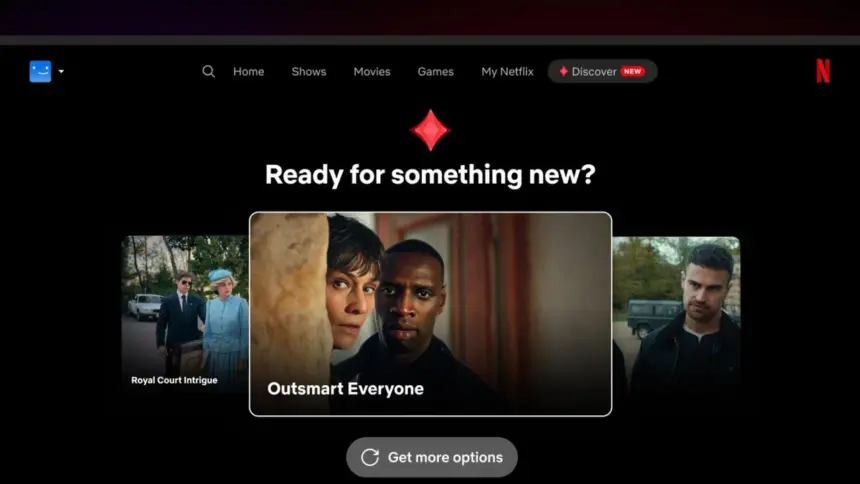
Netflix has begun testing Netflix AI Discover, an experimental television interface that curates programmes and films around moods and themes, rolling out to select subscribers in the United States on Tuesday, 3 November 2026, as the streaming platform explores interactive ways to retain audience attention.
Key points
- A new Discover tab on supported television sets presents curated categories such as Quick Watches, Family Movie Night and Scare Me.
- Subscribers can adjust future suggestions immediately using a Tune Your Recommendations control to approve or exclude individual titles.
- The system relies on a newly deployed machine-learning architecture designed to adapt recommendations in real time as viewers interact with the service.
- The trial follows earlier natural-language mobile tests and arrives as Netflix manages slower subscriber expansion and an internal workforce reduction.
The feature introduces an interactive layer to the television interface, placing a dedicated Discover icon beside existing navigation headings at the top of the screen. Instead of relying purely on historical viewing records and algorithmic carousels, the tool encourages subscribers to declare their current viewing intentions directly before any title is selected.
Viewers who receive the update can navigate through a series of broad scenarios, from solitary viewing to family evenings or brief viewing windows. Selecting a mood presents a bespoke page populated by both original productions and licensed titles, accompanied by short video previews, cover art and summary details.
How the recommendation system works
The interface groups titles under descriptive headers rather than traditional film genres. Initial options presented to test accounts include mood prompts such as Something Light and Scare Me, alongside temporal filters such as Quick Watches and contextual situations including Family Movie Night and Solo Movie Night.

Once an initial theme is chosen, the platform presents a fresh row of subcategory options directly below the primary titles. These prompts allow viewers to drill down further into specific narrative types, including workplace comedies or offbeat stories. The system also supplies a Something Different button to refresh the entire selection if the initial suggestions fail to fit the moment.
Direct control over future algorithmic suggestions forms a core element of the software test. Beside the standard Play and My List buttons on each title card, the company has added a dedicated button labelled Tune Your Recommendations. Clicking the control gives viewers the ability to confirm they want similar suggestions or instruct the system to stop presenting the programme.
When a viewer chooses to dismiss a title, the software asks for clarification, prompting the user to state whether they have already watched it elsewhere or simply have no interest in the premise. That selection informs future presentations within the tab, preventing rejected titles from recurring across subsequent browsing sessions.
The underlying technology
In an official product announcement, the company published details on introducing AI Discover, describing the platform as an active feedback mechanism rather than a static recommendation list. Netflix described the setup as “a new intelligence layer we’ve been building that responds to what members tell us in real time and keeps learning.”

Traditional recommendation systems in streaming video rely heavily on passive metrics: completion rates, aggregate viewing hours, items added to watchlists, and thumbs-up ratings submitted after a programme finishes. The new system attempts to compress this feedback cycle into the browsing phase itself, adjusting recommendations instantly while the viewer is still making a choice.
Company executives previously hinted at this development during a first-quarter earnings call, where leadership outlined intentions to build machine-learning tools capable of interpreting subscriber preferences more conversationally. The TV trial follows a mobile pilot conducted in May 2025, which allowed smartphone users to type conversational phrases, such as requesting a film that was scary but funny, into the search bar to locate specific cross-genre catalogue entries.
Strategic pressures and catalogue discoverability
The arrival of the new browsing interface comes at a complex commercial moment for the entertainment company. Netflix recently cut approximately 1,000 jobs across several divisions following a period of decelerating customer growth and reports that average viewing hours per account had dipped.
With production budgets constrained across Hollywood and subscriber acquisition costs rising, streaming operators depend increasingly on catalogue retention. When viewers spend ten to fifteen minutes scrolling through horizontal carousels without selecting a programme, they frequently abandon the application altogether. The company wants the theme-based interface to reduce that browsing friction.
By organising content around circumstantial needs (such as finding something short to watch before sleeping, or locating a film suitable for mixed age groups), the tool attempts to surface older library titles that might otherwise remain buried beneath newly promoted releases. Demonstrations shown to journalists confirmed that the system blends high-profile licensed acquisitions with proprietary Netflix releases, matching titles based on contextual tone rather than promotional priority alone.
Rollout timeline and testing constraints
Access to the initial deployment remains strictly controlled. The trial is restricted to a selected group of English-language subscribers based in the United States who access the service through supported television applications. Accounts selected for the trial cannot manually opt in or out of the test, though viewers can ignore the tab and continue using the traditional homepage layout.
Accounts included in the sample group will see a red icon labelled Discover in the top menu bar, highlighted with a small badge indicating that the feature is new. The company plans to widen the testing pool to additional domestic households over the coming weeks, monitoring engagement metrics before deciding whether to adapt the code for international markets.
Software engineers at the company are treating the dedicated tab as an isolated testbed for experimental interface designs. If viewers consistently engage with the contextual themes and fine-tuning controls, elements of the underlying intelligence layer could eventually replace standard rows across the primary home screen.
For the moment, the streaming company will collect interaction metrics from the trial accounts to determine whether real-time preference tuning genuinely increases viewing hours or simply alters how subscribers browse.