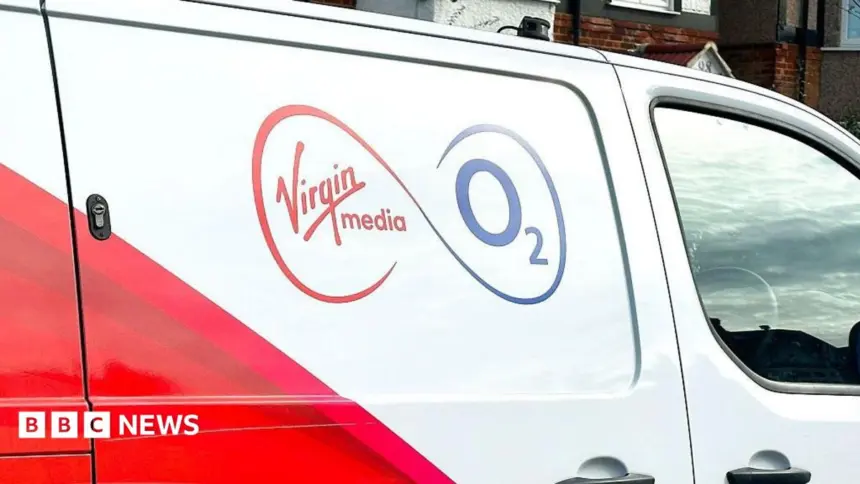
Thousands of Virgin Media O2 job cuts are being planned across the company’s UK operations as the telecoms firm moves to lower operating costs, manage £27.2bn of balance sheet debt and pull back from building its own fibre broadband network.
Key points
- Virgin Media O2 plans to cut thousands of positions from its 16,000-strong UK workforce, with non-customer facing roles taking the brunt of the redundancies.
- The broadband provider carried £27.2bn in total debt against £45.9bn in assets at the end of June.
- The company is close to signing an agreement to use BT’s fibre network, halting further investment in its own optical infrastructure.
- Regulatory challenges have limited expansion after competition authorities raised concerns over a proposed £2bn purchase of alternative network Netomnia.
Non-customer roles face redundancy
Virgin Media O2 has not settled on a final figure for the planned redundancies, but the reductions will account for a sizeable proportion of its 16,000 UK staff, the BBC reported. Sky News first reported that management was working on the staff reductions.
Most of the positions at risk sit outside customer-facing teams, focusing on central functions and back-office operations. Several senior leadership departures are already under way, and the company plans to review its spending on external contractors and third-party suppliers alongside the headcount reductions.
Virgin Media O2 declined to comment on the cuts. Trade union Prospect, which represents staff at the company, said the news was “disappointing and very unsettling”. Noel McClean, Prospect deputy general secretary, said the union would work with management to limit the number of redundancies and seek retraining and redeployment for those affected.
Managing £27.2bn in balance sheet debt
The job cuts follow years of heavy spending to upgrade legacy cable connections to full-fibre broadband. Virgin Media O2’s latest accounts show that as of 30 June, the company held assets of £45.9bn against £27.2bn in total debt.
Rising borrowing costs have made servicing that debt pile more expensive. At the same time, building out physical fibre lines requires high upfront capital expenditure for trenching, cabling and connection hardware, draining cash reserves before new lines begin generating revenue.
To stop those cash outflows, Virgin Media O2 is shifting its engineering strategy. Rather than laying its own optical lines to compete with BT across the UK, the company is close to finalising an agreement to lease access to BT’s national fibre network, the Financial Times reported. The company is expected to announce on Tuesday that it will halt direct investment in its own fibre rollout.
News of the pending network-sharing agreement sent BT shares up 7% on Friday, reflecting the revenue BT stands to gain by leasing its Openreach broadband lines to its primary domestic rival.

Challenger networks squeeze broadband margins
Virgin Media O2 has come under increasing commercial pressure from smaller, low-cost optical broadband providers known as altnets. Firms such as Hyperoptic, Community Fibre, Gigaclear and YouFibre have laid fast fibre networks across UK towns and cities, often undercutting established incumbents on subscription pricing.
In response, owners of Virgin Media O2 formed a joint venture called nexfibre to acquire challenger networks. Nexfibre agreed a £2bn takeover of altnet competitor Netomnia to broaden its optical reach without having to build fresh ducts and cables from scratch.
That transaction ran into regulatory resistance. In an interim report, the Competition and Markets Authority provisionally found competition concerns in the deal, leaving the acquisition in doubt ahead of a final decision due in December.
Regulatory friction over BT’s TalkTalk takeover
The regulatory scrutiny on the Netomnia purchase angered Virgin Media O2 executives, especially after the competition watchdog cleared BT to take over rival TalkTalk in October. Virgin Media O2 described the approval of that deal as a “stitch-up” that permitted BT to strengthen its control over the national broadband market.
BT defended its purchase of TalkTalk, stating that stepping in provided a vital safety net for consumers whose internet service was threatened by TalkTalk’s financial distress.
With its acquisition route blocked and capital budgets tightened, Virgin Media O2 is left with little choice but to lean on BT’s physical footprint while stripping costs from its own operations. Halting direct civil works reduces the need for large project teams, accelerating the planned restructuring across its domestic divisions.
Virgin Media O2 is expected to detail the operational changes and the formal pause on proprietary fibre investment when it publishes its quarterly financial results on Tuesday.