Octopus Energy has signed an agreement with battery manufacturers CATL and Ampace to develop new home battery storage systems across Europe, the British supplier announced on Tuesday. The partnership aims to build cheaper residential batteries with longer lifespans by pairing Chinese cell chemistry with British grid software.
Key points
- Octopus Energy signed a memorandum of understanding with CATL and Ampace to design residential batteries for European households.
- The collaboration combines Octopus’s smart tariffs and mobile app with hardware engineering and cell manufacturing from China.
- The manufacturers aim to lower equipment costs and extend battery lifespans using high-density cells and potential sodium-ion chemistry.
- The rollout follows Octopus’s existing plans for its Nook battery units, which offer storage capacities between 2 kWh and 10 kWh.
Software meets cell chemistry
Under the memorandum of understanding, the three companies will divide responsibilities between software and hardware. Octopus Energy will provide the consumer software layer, including its mobile application, customer platform and smart time-of-use tariffs. CATL, the world’s largest manufacturer of electric vehicle batteries, and Ampace, its joint venture focused on lithium-ion technology, will supply cell chemistry and hardware design.
The collaboration will initially focus on European markets. The companies have not yet published specifications, pricing or launch dates for specific models. However, the agreement outlines targets for higher-density cell designs, extended operating lifecycles and alternative chemistries, including sodium-ion technology, which uses cheaper raw materials than standard lithium formulations.
Greg Jackson, chief executive of Octopus Energy Group, said: “Together, we’re building next-generation batteries where hardware and software work in complete harmony to slash energy bills and speed up the green energy transition.”

How domestic storage manages power
Home batteries lower energy bills by arbitrating price swings on the electrical grid. A storage unit charges up from the grid overnight or during off-peak hours when wholesale power prices fall, or draws surplus generation directly from rooftop solar panels during the day.
When electricity prices peak in the evening, the system discharges its stored power to run household appliances, shielding the customer from higher rates. Advanced setups can also export stored electricity back to the grid during periods of high demand, earning payments for the homeowner while easing pressure on transmission networks.
Jason Zhu, president of energy storage systems at Ampace, said: “The future of energy is not just about generating or storing more power, but about making energy smarter, more connected, and more accessible.”
The push into European residential energy
The agreement expands Octopus Energy’s broader push into domestic clean technology. Alongside its retail energy supply business, the company installs domestic heat pumps and electric vehicle chargers across Britain and mainland Europe.
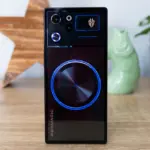
Octopus has already revealed plans to sell its own branded home storage system, dubbed the Nook. The Nook is planned in two sizes, offering capacities ranging from 2 kWh to 10 kWh. According to figures from energy regulator Ofgem, 10 kWh is slightly more than the average daily electricity consumption of a medium-sized British house.
Domestic battery hardware has become an increasingly competitive sector in Europe. Equipment makers and energy suppliers are racing to connect solar installations, heat pumps and batteries into unified systems, mirroring shifts seen in competing platforms such as Tesla’s Powerwall 3 thermal energy storage integrations.
Raymond Ye, president of residential energy storage systems at Ampace, said that rising demand for flexible domestic energy across Europe gives the group room to accelerate hardware deployments.
What happens next
The memorandum of understanding represents an early-stage development pact rather than a commercial product launch. Octopus Energy, CATL and Ampace have not set a public timetable for when the first co-developed batteries will enter production or reach residential installers.
In the near term, Octopus remains focused on bringing its initial Nook battery storage hardware to market, while engineering teams across the three firms begin testing cell prototypes and integrating them with the supplier’s automated grid software.