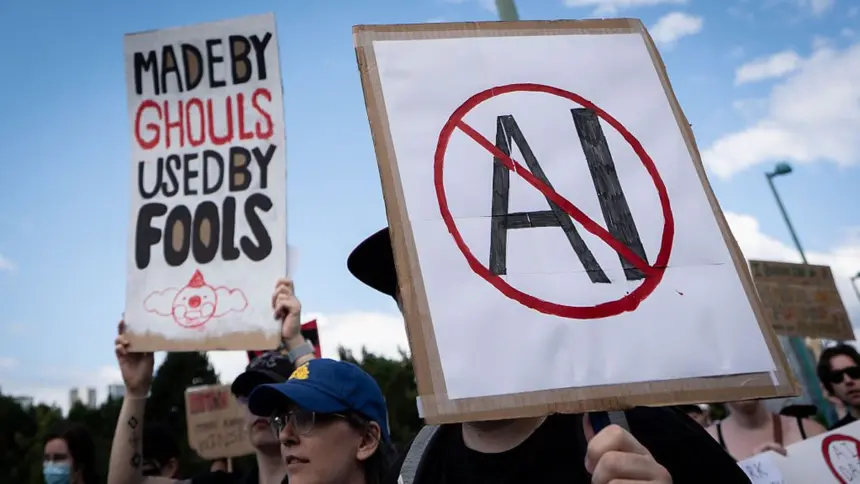
OpenAI is preparing to rebrand its data centres as AI compute campuses as part of a public relations campaign following the US midterm elections. The move comes amid rising public resistance to the heavy electricity, land and water demands required to build large artificial intelligence infrastructure across American towns and cities.
Key points
- OpenAI plans to pitch future facilities as AI compute campuses to counter growing public scepticism over physical tech infrastructure.
- Chris Lehane, the company’s chief global affairs officer, said the 2026 midterm elections will serve as a preview for artificial intelligence becoming a central issue in the 2028 presidential race.
- A Pew Research survey found only 4% of Americans believe data centres provide an entirely positive local impact on jobs, utility bills and the environment.
- Competitors including Microsoft and Amazon recently abandoned non-disclosure agreements in their talks with municipal planning authorities.
The post-election PR offensive
The proposed name change is part of an upcoming communications campaign planned for the aftermath of the US midterms, Axios reported on Sunday. OpenAI expects political scrutiny to increase sharply if Democrats regain control of the House of Representatives or the Senate.
Chris Lehane, the chief global affairs officer at OpenAI, told Axios that the midterms will serve as “a bit of a movie trailer for what you’re going to see in 2028.” Lehane anticipates artificial intelligence will emerge as a defining topic in the next presidential campaign.
Alongside the terminology shift, Lehane outlined several policy ideas. These include setting voluntary AI “speed limits”, lobbying the federal government to shape international technical benchmarks, and attempting to show voters how automation can assist their daily routines.

A spokesperson for OpenAI confirmed the wording change to Business Insider, stating that the phrase better reflects the scale of the company’s long-term capital investments. “Compute campuses better describes the scale and role of the infrastructure we’re building for AI,” the spokesperson said. “These are long-term investments in computing, energy infrastructure and skilled work.”
Growing local pushback against server farms
Technology companies face mounting friction from residents, municipal leaders and environmental groups over the rapid growth of large server facilities. The buildings consume vast quantities of grid power and municipal water for cooling systems, often driving up local electricity tariffs without generating substantial long-term employment.
According to a September Pew survey, public opinion towards data centres has fallen sharply. The research analysed attitudes towards neighbourhood living conditions, utility bills, environmental effects, tax receipts and employment. Just 4% of respondents believed data centres brought positive results across all five measures.
The issue has already filtered into election contests. Candidates in multiple states have attacked rivals by labelling them a “data senator” for approving zoning permits or state tax subsidies. Political strategists consider the tag effective because community anger crosses conventional party lines.

OpenAI framed the controversy as an opportunity for closer local engagement. Lehane described the public debate surrounding facility construction as “good and healthy”, adding that towns should demand tangible local benefits before approving heavy utility hookups.
“We want the communities hosting that infrastructure to help shape it and share in the opportunities it creates,” an OpenAI spokesperson said.
Shifting industry tactics and language
The phrase AI compute campuses is not the first attempt by tech executives and politicians to alter public language around computing infrastructure. In September, Donald Trump directed federal agencies to replace the term artificial intelligence with “Super Intelligence” in official documents. While several industry leaders adopted the phrasing, OpenAI chief executive Sam Altman declined to follow suit.
The public relations adjustment comes as the industry faces severe commercial pressure over the cost of building next-generation facilities. While rivals cut back on capital spending, OpenAI has explored outside capacity, including talks to purchase Google TPUs to support its training clusters. The firm has had to navigate financial constraints, having earlier seen its funding target cut during broader tech sector volatility.
Other operators have tried to defuse local hostility by increasing transparency. Amazon and Microsoft recently agreed to stop using non-disclosure agreements when negotiating power and water allocations with local councils, after complaints that secrecy pacts blocked public scrutiny of municipal resources.
OpenAI has not detailed whether the campus term will involve specific design changes, such as on-site education facilities or dedicated renewable generation, or remain a marketing designation for standard server halls.