
Apple warned that soaring Apple memory costs will squeeze profit margins during the holiday quarter as an artificial intelligence spending boom drains global RAM supplies. Chief executive John Ternus issued the forecast during Apple’s fourth-quarter earnings call on Monday, projecting gross margin to fall between 45% and 46%.
Key points
- Gross margins are projected to fall between 45% and 46% in the holiday quarter, down from 47.9% in the September period.
- Manufacturing purchase obligations jumped by $33bn between June and September as Apple moved to lock in component deliveries.
- Booming demand from AI server operators has absorbed memory fab capacity, driving prices higher for consumer device makers.
- Fourth-quarter revenue reached a record $114.5bn, yet shares dropped as profitability targets missed Wall Street estimates.
Holiday margins face component pressure
Apple delivered a record September quarter, but investor focus quickly shifted to the rising price of parts. In Apple’s fourth-quarter earnings release, the company posted revenue of $114.5bn, a 12% rise from a year earlier. Net income climbed to $30.71bn, or $2.10 a share, beating consensus forecasts compiled by LSEG.
Chief financial officer Kevan Parekh then told analysts that gross margins would decline in the December period to between 45% and 46%. Wall Street analysts had pencilled in 46.3%. At the midpoint, the forecast represents Apple’s weakest margin performance since the fourth quarter of 2023.
Parekh cited two direct pressures on the company’s profitability. Memory chip expenses remain the primary drag, alongside operating costs from rolling out server-side models for Siri AI. The company is introducing usage restrictions on cloud-based features such as intelligent photo editing to keep those server overheads in check.

During the call, Ternus was blunt about the state of component procurement across the electronics sector. “What we’re seeing with memory pricing right now is unprecedented,” Ternus said. He told investors that Apple paid higher component rates in the September quarter than in June, and expects prices to climb further during the winter.
The AI boom dries up memory supplies
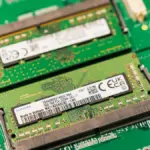
The root of the shortage lies in the rapid buildout of artificial intelligence infrastructure. Cloud hyperscalers and chipmakers such as Nvidia have bought up massive quantities of high-bandwidth memory and high-capacity DRAM modules. Server builders routinely pay premium prices to secure capacity, pushing semiconductor foundries to reallocate fabrication lines away from standard consumer parts.
That reallocation has left makers of personal computers, tablets and smartphones competing over diminished factory output. The supply crunch has already reshaped global trade flows and component logistics, with fierce international competition documented around high-bandwidth memory distribution networks.
Major chip manufacturers confirm that supplies will remain constrained. South Korean memory giant Samsung warned that memory demand would outstrip factory output for years, with its memory executives projecting that the crunch could run into 2028. SK Hynix has committed more than half of its production output through 2028 under long-term supply deals, while Micron reported that inventories will require considerable time to recover.
To protect its manufacturing schedules, Apple has leaned on its cash reserves. Chief operating officer Sabih Khan joined the earnings call on Monday, becoming the first Apple operating chief to address quarterly results since Tim Cook did so in 2010. Khan reported that manufacturing purchase commitments surged by $33bn between June and September.
“As we have said before, we’re seeing less flexibility in the supply chain than normal,” Khan said. He declined to state whether Apple had entered into multi-year fixed-price contracts with memory vendors, but balance sheet data showed inventory rising to $14.54bn from $5.72bn a year earlier.
How hardware sales performed
Despite parts bottlenecks, consumer demand remained healthy through the end of the fiscal year. iPhone sales grew 17% year on year to $57.58bn, setting a September-quarter record. The period captured the initial eight days of sales for the iPhone 18 Pro line, though the newer iPhone Duo arrived in retail stores on 23 October.
Khan told analysts that iPhone Duo supplies remain constrained, with balanced stock levels difficult to predict. Ternus also told Reuters that a small fraction of Duo handsets were returned due to display faults, with Apple providing immediate warranty replacements.
The personal computer business also expanded. Mac revenue climbed 24% to $10.79bn, aided by strong interest in hardware tailored for local AI development. Ternus cited data from research group IDC showing Apple gained market share in personal computing over the full fiscal year. Flagship portables such as the Apple MacBook Air 13-inch M5 helped support computer shipments ahead of the autumn upgrade cycle.
Other divisions delivered mixed results. Services revenue reached an all-time peak of $31.57bn, up 10%. iPad sales dropped 10% to $6.23bn, while the wearables, home and accessories division slid 8% to $8.30bn. Greater China revenue expanded 21% to $17.54bn, falling short of analyst targets of $18.58bn, whereas India set an all-time quarterly revenue record.
What the price shock means for buyers
Apple has already moved to protect its profitability by lifting device prices. The company increased prices across its Mac and iPad lines in late June, adding as much as $400 to select professional computer configurations. In September, Apple raised starting prices across the iPhone family by $100.
Those retail adjustments provided partial relief against higher bill-of-materials costs during late summer. A one-off tariff refund also added one percentage point to gross margins in the September quarter. Parekh noted that Apple has now collected most of those refunds, removing that support from the holiday balance sheet.
While consumer electronics peers face similar supply headaches, Apple maintains wider margins than PC rivals reliant on third-party operating systems. Aviva Investors fund manager Sunil Krishnan told the BBC that gross margins above 45% remain historically strong for a mature consumer hardware business, even if they sit below recent highs.
Apple shares dropped 3.8% in premarket trading on Tuesday morning following the margin forecast. The company expects total revenue growth of 7% to 10% for the December quarter, which would mark the highest quarterly sales total in its history.